
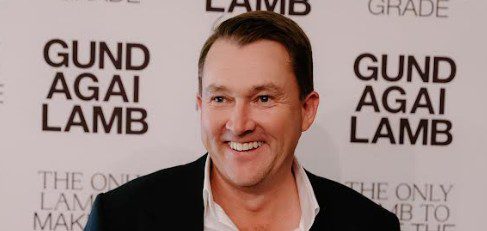
Will Barton
GUNDAGAI Meat Processors chief executive officer Will Barton has thrown his weight behind wider producer discussion on lamb feedlotting especially within an eating quality context.
In a recent LinkedIn post, Mr Barton made some comparisons between lotfeeding of beef cattle and of lambs, and the need for consideration of the lamb sector’s different needs.
“In beef, the purpose of grain feeding is typically connected to a desire to make a grain-fed claim on the end product.
“This claim carries an expectation that the meat will feature higher marbling and tenderness outcomes, with added supply chain benefits including faster growth rates and consistency of quality,” he said.
To make a grain-fed beef product claim, a minimum of 100 days on feed in a feedlot participating in the National Feedlot Accreditation Scheme is required, Mr Barton said.
No customers asking for grain-fed lamb
However, with lamb, Mr Barton said it’s more about getting the animal to processing weight and condition and it’s typically when seasons don’t allow you to achieve that on improved pastures or grazing crops.
“I don’t have any customers (domestic or export) asking me specifically for grain-fed lamb.
“Given that it’s largely a seasonal thing, this means that one or two years in five (at least around Gundagai) it’s going to be super critical to have grain finishing capacity and the balance of the time it may be surplus to requirements.”
Mr Barton said because of this dynamic, much of the growth in lamb feeding infrastructure over the past 10 years has been in smaller-scale on-farm confinement lots, which are capital-light, used to take pressure off pastures and for seasonal finishing.
“On that logic, large, centralised feedlots might not have the best return on investment, given demand for their services will vary greatly by season – unless they can guarantee, or at least improve the likelihood of, better eating quality outcomes.
“Our experience so far with Gundagai Lamb and the objective carcase measurements we take, is that grain feeding does not necessarily equal higher intramuscular fat levels, and lambs are sometimes better left in the paddock (if the season allows),” he said.
Engage in Future Flock consultation
Mr Barton has urged sheep producers to get involved in The Future Flock consultation process, not top push any outcome, but because the subject needs to be thought through and talked about consciously.
“It’s easy not to engage with a process like this, and that’s exactly why we should.
“Future Flock is pitched as a holistic plan that gives “clarity and confidence for long-term decisions around industry profit and sustainability”,” he said.
“That’s a plan worth engaging with in my view.”
Mr Barton told Sheep Central that over the past few years the industry has drifted toward more feedlotting with little oversight, largely because no one got in the way and things just got done.
“t’s a pragmatic approach, but there’s a potential risk in that kind of unconscious shift.
“This is a structural change worth being conscious about,” he said.
“It’s not about either or, there is room for different production systems, large industrialised complexes through to extensive, grass-based and organic systems, but the industry shouldn’t sleepwalk into it.
“Getting involved is how stakeholders make sure their perspective is part of the picture.”
On whether there is a need for industry assistance or information/extension on lamb lotfeeding, Mr Barton said many producers have already figured it out, often with help from government departments, RDCs, industry and producer groups.
“I think that’s true of most nutrition topics.
“The real question is whether producers should be better educated on finishing lambs for eating quality in the paddock, and the answer is yes – based on our experience at Gundagai Lamb.”
Mr Barton said in GMP’s experience, the customer demand for lamb is largely grass-fed, but supplementary finishing with grain (in paddock or in feedlot) is a critical supply lever for dry years – these are two different things.
A case for better education to maximise eating quality outcomes
Mr Barton said there is a case for better education around paddock finishing of lambs to maximise eating quality outcomes.
“However, Gundagai Lamb is breed and feed agnostic – how you get to the outcome is not our primary focus – the outcome itself is.”
Mr Barton said the industry need for small-scaled fodder crop-based lotfeeding versus large intensive grain-based feedlots or a combination of both, can be dictated by the season and the supply chain.
“Centralised finishing would come with the benefit of letting the breeding flock expand substantially (breed on the same land, finish elsewhere).
“However, lamb has historically benefited from not being an industrialised complex, so on-farm finishing could perhaps be the better route,” he said.
“The point here is balance – there’s room for both industrialised and extensive grass-based systems.”
Despite recent media about the face-to-face Future Flock consultation being largely by invitation only, Mr Barton said as far as he is aware, any producer can go to the website and complete the survey.
He said it is very important that as many producers as possible have input into the lotfeeding of lambs via Future Flock.
“The point of planning is to shape the future rather than react to it – and a plan only reflects reality when the people living that reality have had their say.”
HAVE YOUR SAY