
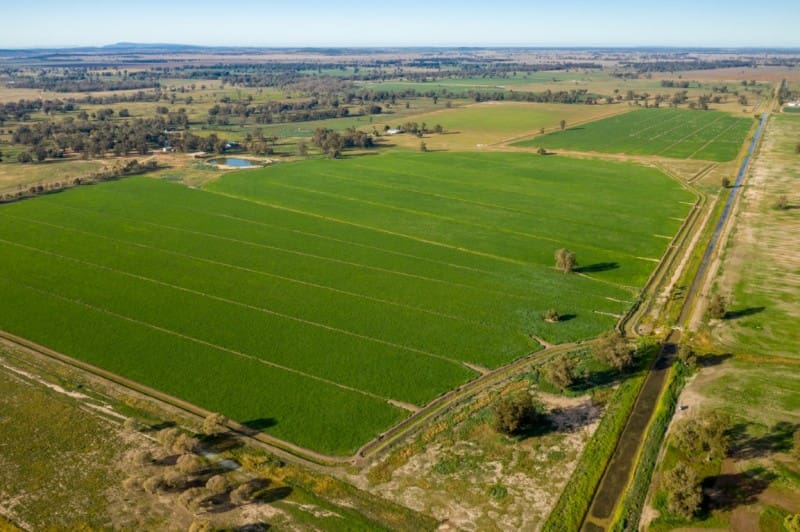
West Plains is one of the four properties Duxton Farms plans to retain in its Forbes Aggregation. File photo: Miller & James
DUXTON Farms is offloading 1475ha of land in central western New South Wales as it switches focus from dryland to irrigation cropping, and expands its Northern Territory footprint.
The 940ha Cowaribin has 281ha of irrigation, and the 535ha Merriment has 367ha of irrigation. Both properties form part of Duxton’s NSW aggregation centred south-west of Forbes.
No sales expectations have been made available, but recent valuations undertaken by CBRE and Knight Frank peg both Cowaribin and Merriment at $6.45 million.
In preparation, Duxton has sold most of the livestock and has appointed Kevin Miller, Whitty, Lennon & Co to handle the sale of both properties, and has already received unsolicited interest.
Historically, Cowaribin and Merriment, on the fringe of Duxton’s wider cropping enterprise, have run a livestock program which has been reduced as the company’s cattle exposure in the NT has expanded.
The listings leave four properties in the Forbes aggregation: 1400ha Walla Wallah; 2184ha Yarranlea; 2709ha West Plains, and 768ha Lenborough; it sold the 8432ha Timberscombe to Altora Ag last year.
Duxton Farms said it is continuing to refine the focus of the NSW aggregation to concentrate on irrigated cropping, while more generally broadening the company’s exposure to the Australian agricultural sector.
In April, the company announced the sale of most of the 6020ha Kentucky Aggregation at nearby Wirrinya to Alkira Farms, an investment arm of the Utah-based Church of Jesus Christ of Latter-day Saints.
In Duxton’s annual report, chairman Ed Peter paid tribute to operations general manager Bryan Goldsmith for facilitating an investment strategy shift “by focusing resources on developing the group’s greenfield pistachio orchard near Piambie in Victoria and its Northern Australian properties – Mountain Valley Station and the Wildman Agricultural Precinct.”
In 2023, Duxton signed a five-year lease on the 141,000ha Mountain Valley Station, in the NT’s Central Arnhem Land, with plans to trial dryland cotton; it also runs more than 9650 head of cattle, including 3800 breeders.
Mr Goldsmith is currently exploring options to further develop areas of the NSW aggregation to irrigation.
The report said the operations team has made considerable progress in building new aggregations which, in time, “will likely serve as the foundations of a larger, more diversified business…and progress towards a portfolio with more (and more robust) opportunities for value creation.”
HAVE YOUR SAY