
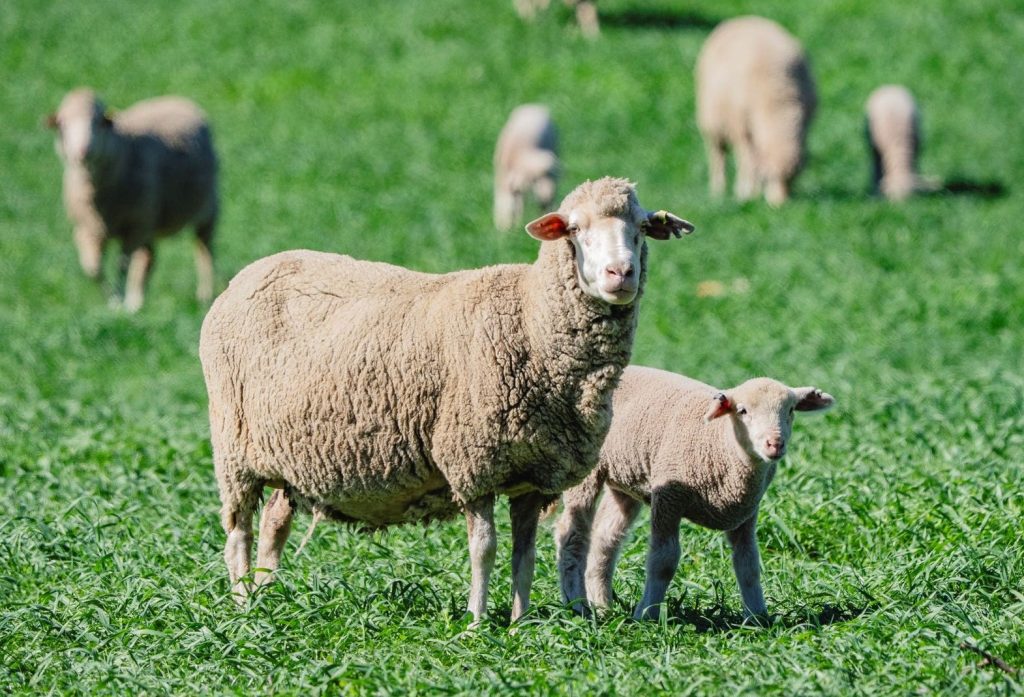
AUSTRALIAN sheep producers were the most confident commodity group in the second quarter, followed by beef then grain, according to the latest Rabobank Rural Confidence Survey.
The quarter two survey found sentiment tracking lower across all agricultural commodities this quarter, but sheep producers remained the most optimistic, with confidence easing to a net -27 percent amid higher input costs and seasonal uncertainty.
Rabobank group executive for Country Banking Australia Marcel van Doremaele said there was a dip in lamb and mutton prices at the end of April, but this corrected and they remain at historically high levels.
RaboResearch forecasts this to continue as the industry heads toward the traditionally lower slaughter months of July to August,” Mr van Doremaele said.
“Wool prices are also performing well, underpinning the confidence of producers despite elevated production costs.”
Input costs and seasonal conditions hit beef confidence
Rabobank said beef producer confidence took a tumble this quarter, driven down to net -40 per cent with nearly half citing elevated input costs and seasonal conditions as their main concerns.
At the time of the survey, cattle prices had also been tracked lower, albeit off a high base, Mr van Doremaele said.
“Having now recovered these losses, cattle prices are expected to track close to current levels through early winter, with drought-related volumes of cattle being sold in northern NSW contracting and global markets for Australian beef remaining strong.”
Grain grower confidence fell sharply
Rabobank said grain grower confidence fell sharply to net -61 per cent in the second quarter, reflecting the sector’s exposure to high farm input prices – especially fuel and fertiliser – paired with weaker price signals and concern about fertiliser shortage from global supply chain reductions.
“We are seeing some deliberate decisions around whether to apply or hold off urea in response to rain events as growers balance the risk-reward to yield and budgets,” Mr van Doremaele said.
Confidence also dropped in the dairy, sugar cane and cotton sectors, mainly impacted by input costs.
National confidence at lowest point since 2006
The quarter two survey found national sentiment at its lowest point since November 2006 as it dropped to a net reading of 48 percent, with concerns about the escalating cost and potential shortage of key farm inputs – fuel and fertiliser – contributing to more than half of the nation’s farmers expecting conditions in the agricultural economy to worsen in the coming 12 months — 58pc, up from 28pc last quarter.
The latest survey, completed last month, found only one in 10 farmers reported having a positive outlook on the year ahead — at 10pc, down from 19pc in quarter one. About 28pc of survey respondents expected conditions would stay the same — down from 50pc with that view previously. Rising input costs were cited by 60pc of respondents as a key concern, up from 36pc last quarter. ‘Energy security’ also emerged as a notable concern for the first time and was cited by 26pc of respondents nationally.
Southern Australian farmers more confident
The survey has also highlighted the difference in quarter two confidence between producers in southern and northern Australia. Rising input costs was the leading cause for concern in all states, but confidence was highest among Victorian and Tasmanian survey respondents, with net readings of -38pc.
“Victorian farmers overall are balancing cost pressures with expectations of good commodity prices, which has seen their investment intentions remain stable,” Mr van Doremaele said. “While in Tasmania, enterprise diversity has been providing farmers with flexibility to respond to high input prices by adjusting the area planted to high-input crops.”
New South Wales farmers were the least confident, with net rural sentiment index dropping to -55pc due to elevated input costs coupled and dry weather conditions across parts of the state in autumn.
“However, nearly half of NSW farmers are hopeful rising commodity prices will deliver a positive impact over the year ahead and since the survey, spirits have been buoyed in regions where beneficial rain fell through late May,” Mr van Doremaele said.
The survey found rural sentiment in Queensland continued downward trend to a net reading of -54pc.
“Despite confidence among Queensland producers sliding to what is the lowest point since tracking began in 2001, producers in the state continue to demonstrate a more positive longer-term outlook with more than half intending to maintain current investment levels and 17pcent planning to increase investment,” Mr van Doremaele said.
In Western Australia, confidence dipped to a net reading of -49 per cent, with 71pc of farmers surveyed concerned rising input costs will have a negative impact on the economy.
“The shining light for WA producers is a solid start to the season, but growers will be keeping a close eye on global fertiliser markets and commodity market movements as the year progresses,” Mr van Doremaele said.
In South Australia, although confidence dipped to a net -39pc, farmers have received a good start to the season post-survey and optimism on-the-ground appeared to be building since the field work was conducted in May, he said.
HAVE YOUR SAY