
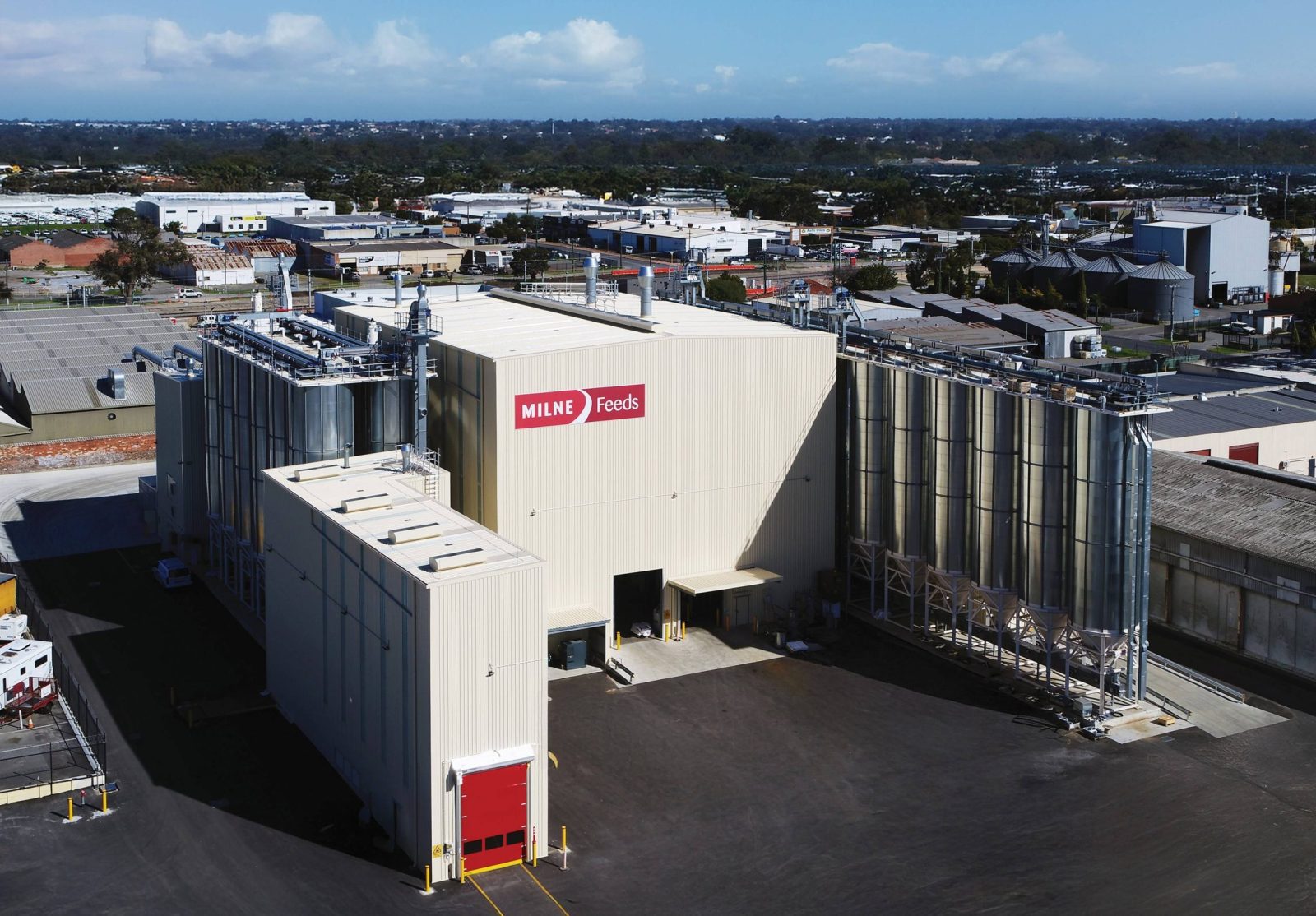
Milne Feeds new Welshpool plant is gearing up to produce 300,000 tonnes of feed per annum. Photo: Milne Feeds
AUSTRALIA’S largest ruminant feed mill is being commissioned in Western Australia this month by Milne Feeds.
The mill has an annual capacity of 300,000 tonnes, double that of Milne Feeds’ adjacent mill on the company’s longstanding site in the Perth suburb of Welshpool.
Its capacity will leapfrog Mort & Co’s 250,000t-per-annum mill at its Grassdale feedlot in in southern Queensland as Australia’s largest producer of ruminant feed.
Milne Feeds’ cornerstone products are EasyOne and LambGro pellets for sheep and lambs, and the company also formulates feed for beef and dairy cattle and horses.
As part of Milne AgriGroup, Milne Feeds sells pellets direct from the mill, through its network of bulk depots in WA, and through resellers.
It also supplies interstate demand, particularly in drought periods, and export customers.
Major value adder
The new mill will double Milne Feeds’ annual demand for inputs which already make it a significant value-adder of WA grain.
Ingredients used include wheat, barley, oats, lupins, triticale, canola meal, and cereal byproducts and straw.
In 2023, Milne Feeds received $5 million from the WA Government’s Investment Attraction Fund for the new mill, which incorporates digital manufacturing systems, precision production equipment, and real-time quality assurance.
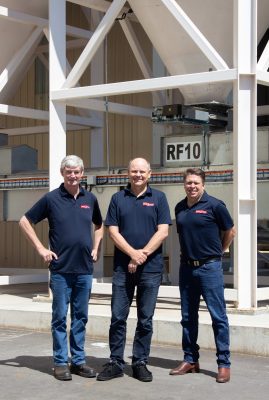
Milne Feeds’ grain buyer David Syme, general manager Michael Tarling and sales manager Paul Nenke. Photo: Milne Feeds
In a statement, Milne Feeds said these features supported enhanced quality control, as well as ongoing research into further value-added products.
“This additional capacity enables Milne Feeds to better service producers across WA through its extensive network of depots, as well as supply key international customers, who are seeking reliable sources of high-quality fibre feeds,” the company said.
“Milne’s expansion delivers vital insurance by significantly increasing WA’s feed manufacturing capacity and flexibility in times of pasture feed shortages,” Milne Feeds general manager Michael Tarling said.
“By enabling the rapid production of supplementary feeds, even in the face of ingredient shortages or supply-chain shocks, WA producers will be able to maintain higher stocking rates, avoid emergency livestock sales, and enhance resilience through seasonal variability.”
Milne Feeds sales manager Paul Nenke said strong livestock prices across beef and sheep were buoying demand for stockfeed.
WA growers are currently harvesting what is expected to be a record crop, and reliable input supply and soft pricing have sparked a wave of investment in feed production in the state in recent years.
This is despite the impending end to live sheep exports, which have traditionally been volume users of sheep pellets out of WA, as well as South Australia and Victoria.
Grain Central: Get our free news straight to your inbox – Click here