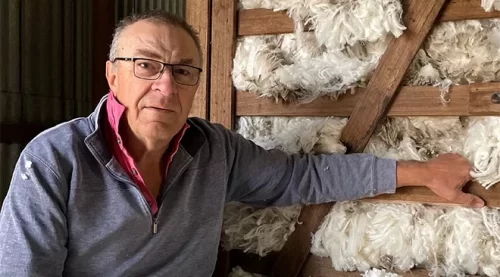
AWI chairman Jock Laurie: backs directors calls to brokers Image – AWI.
AUSTRALIAN Wool Innovation directors questioning major wool brokers over an industry move to form a unified industry strategy on mulesing has been defended by AWI chairman Jock Laurie.
However, National Council of Wool Selling Brokers of Australia president Alistair Calvert believes the directors’ actions were not appropriate and WoolProducers Australia president Steve Harrison queried whether it amounted to agripolitical activity.
Sheep Central has confirmed Merino stud breeders and AWI directors George Millington and Neil Jackson contacted state and/or national executives in major brokering companies – including AWN, Elders and Nutrien Ag Solutions – objecting to a joint media statement from the national broker, exporter and grower bodies on forming a unified mulesing strategy.
Mr Jackson is a principal of the Sunny Valley Merino and Poll Merino Stud and a past president of the Stud Merino Breeders’ Association of WA. Mr Millington is the owner and managing director of the South Australian-based Collinsville Stud Merinos.
AWI chairman supports directors’ actions
The AWI chairman was asked if the director’s questioning of brokers was agripolitical action or amounted to interference in an issue he has repeatedly stated was an industry responsibility.
Mr Laurie said he fully supported the actions of directors Jackson and Millington to engage with industry and provide accurate feedback as well.
“I encourage all directors to continue to engage with industry at all levels on a regular basis.
“Wool growers alone will determine their industry policy; bodies post-farmgate will provide information for growers to make an informed decision,” he said.
Mr Laurie said it is the role of directors to ask questions and talk to stakeholders.
“The concerns of many wool growers who contacted AWI directors about the future of their industry following recent media coverage prompted me to contact brokers to share those concerns.”
He said the company provides clear market feedback to the industry from top to bottom that includes brands, brokers, processors, exporters and wool growers.
AWI urged to rethink its public position on mulesing
The joint statement from the National Council of Wool Selling Brokers of Australia, WoolProducers Australia and the Australian Council of Wool Exporters and Processors on 2 September re-emphasised “the urgent need for a unified industry strategy on mulesing”. It followed comments made by Mr Laurie that non-mulesed wool premiums were inconsistent while encouraging wool production from mulesed sheep.
The organisations believe Mr Laurie’s statements understated the significant and growing risks facing Australian wool in key international markets on the issue of mulesing.
A separate joint email letter to Mr Laurie and cced to all AWI directors on 2 September from the three representative bodies expressed “profound concern” at the AWI chair’s recent public comments that they believed represented “a dangerously complacent and short-sighted view of the global marketplace for Australian wool.”
The signatories said they were witnessing an undeniable shift in global brands and retailers “who are increasingly demanding certified non-mulesed wool.
“To rely on the current market without a proactive industry-wide strategy is a high risk gamble that jeopardises our access to key high-value markets.”
The signatories also said they were concerned that AWI has continued to fail to provide growers “with a transparent account of the reputational and commercial risks associated with mulesing within our supply chains, even though AWI are fully aware of these risks.”
This included AWI not informing growers’ that most international brands partnering with Woolmark require non-mulesed wool.
“The consequence of this lack of transparency is an environment where growers continue to make decisions without full knowledge of the commercial realities.
“This puts them at a competitive disadvantage and erodes trust between AWI, its levy payers and the wider industry,” the letter said.
“Repeated public statements by you that mulesing is a policy issue which therefore prevents AWI from engaging in, due to requirements under the Commonwealth Statutory Funding Agreement are completely disingenuous.”
The signatories said for the long-term health of the industry it is imperative that AWI move beyond a defensive stance on mulesing and equip growers with the information and tools they need evolving consumer demands and maintain Australia’s position as the world’s leading provider of ethical sustainable wool.
The bodies said a unified approach on mulesing “is not a matter of individual choice, it’s a collective responsibility.” They said if the industry did not start working together to address the mulesing issue it risked the red meat industry or “worse still the government” setting the agenda.
“We urge you and the board to reassess your public position and commit to a collaborative forward-looking strategy on mulesing.
“We believe this is critical to protect the long-term profitability and reputation of Australian wool and assure its longevity y.”
The letter was co-signed by ACWEP president Josh Lamb, WPA chief executive officer Jo Hall and NCWSBA president at the time, Rowan Woods.
AWI directors confirm calls to brokers
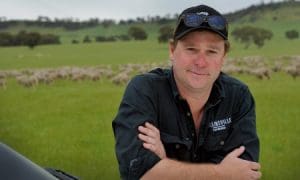
AWI director George Millington.
When contacted by Sheep Central, Mr Millington initially suggested that Sheep Central call “the head of Nutrien Wool and the head of Elders Wool,” “and you would find that very enlightening.”
“I’m not going to talk for them, the conversations I have with people will remain confidential.”
He then confirmed he had spoken to Elders executive general manager network Tom Russo, Elders state wool manager in Victoria Lachie Brown and Nutrien national wool manager Kym Gunn about the mulesing strategy call.
Mr Millington’s comments to Sheep Central took issue with the criticism of Mr Laurie and with the media release calling for an industry mulesing strategy.
“I think it is extremely unhelpful for this industry to try and make policy in the media.
“I think we need to be able to come together and we need to be able to market the properties of wool to all our overseas customers, and its wonderful properties – renewable, organic, biodegradable and a real fibre for the modern ages — what the consumer actually wants these days,” he said.
“I think we should be coming together and talking about the positives as opposed to trying to throw rocks at each other in the media.
“It is so destructive and in the small amount of times I’ve been involved in the politics of this and on the AWI board I can’t fathom why people do it.”
Mr Millington said AWI had to support every levy payer.
“Every levy payer deserves our support for marketing and for research and development.
“We have to offer our support to every levy payer and help every levy payer market their wool, and if they want to use commercial practices that are legal we’re going to support them doing that if that supports their production system.”
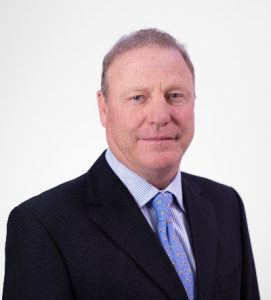
AWI director Neil Jackson.
Mr Jackson confirmed he had spoken to state managers of brokering firms in Western Australia about the mulesing strategy call, including Elders and AWN, which market his wool.
He said his impressions were that the wool managers were “a little bit perplexed” by the call for a mulesing strategy.
“And you can draw from that what you like,” he said.
“I just wanted to find out and get a bit of information as to what they knew about it and the first they knew about was when the press release came out.
“It took them by surprise.”
Mr Jackson then declined to make further comment and referred Sheep Central to Mr Laurie for further comment.
“I’ve obviously got some very strong views on it, but it’s probably not for me to say.”
Neither Mr Jackson nor Mr Millington denied they had called the broker company executives to express their opinions on a proposed mulesing strategy and to ascertain the level of support for the initiative. However, their actions have been perceived as having the effect of potentially dividing brokers over the issue of forming an industry mulesing strategy.
What Jock Laurie has been saying
In July this year he told Sheep Central if there is going to be any change on mulesing and non-mulesed wool production “the industry needs to lead the change.”
The industry policy leaders – the grower and breeder groups, not AWI – need to set the direction in regards to mulesing, he said.
Some major brokers silent on need for a mulesing strategy
Sheep Central has found Australia’s wool brokers are currently sensitive about industry and public discussions on non-mulesed wool production for fear it will alienate stud breeders who support mulesing — impacting ram sales — or the growers producing the majority of their wool throughput from mulesed sheep. Brokers have lost Merino clients to drought and enterprise change to prime lamb production and shedding sheep, beef and cropping, and are concerned about growers who have told them they will leave if mulesing is banned.
Mr Gunn did not return phone call requests for comment. Sheep Central asked via email if Mr Gunn was aware of the joint letter to AWI directors and the media statement; if as a NCWSBA member, did Nutrien Ag Solutions support the industry developing a national strategy on mulesing, and; what was the company’s position on mulesing and the production of non-mulesed wool.
However, Nutrien Ag Solutions digital communications manager, Briar Hanley, advised: “Nutrien do not have a comment on this story.”
Mr Russo said he did not want to have any involvement with the discussion and would not say if Elders supported the call for a national mulesing strategy or not.
“I don’t want to have anything to do with it, we don’t have a position on it, it’s not for us to have a position on it.
“It’s for our farmers to decide, we’re not going to presume upon them what’s right or wrong,” he said.
“So I’m not going to be drawn into an industry fight.
“As brokers we don’t (have a position), as brokers we are there to support our customers to do the best things we can for them and to not presume upon them whether they are right or wrong in the way they operate their business as long as they are doing it within the law.”
Mr Russo then reiterated he was not going to give a comment on a company position on the issue of a national mulesing strategy.
AWN chairman John Colley confirmed he discussed the mulesing strategy media release with Mr Millington as a small part of a general conversation on marketing and history.
“We had a long involved conversation that was productive.”
Mr Colley confirmed with Sheep Central that he supported the call for an industry strategy on mulesing and outlined the feedback he had received from the recent Nanjing Wool Conference. (with an embedded link to my Nanjing story.)
Not appropriate for AWI directors to lobby brokers
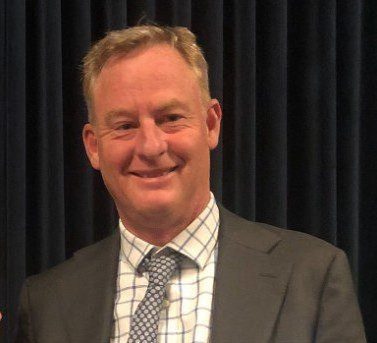
NCWSBA president Alistair Calvert
National Council of Wool Selling Brokers of Australia president Alistair Calvert said he was unaware of what was discussed by the AWI directors and brokers they called.
When asked if he believed it was appropriate that AWI directors interfere with the process of forming a unified industry strategy on mulesing, Mr Calvert said it was hard for him to comment because he did not know what had been said.
“But what I will say is that I don’t think it is appropriate that AWI directors contact brokers with a particular view that they’re trying to put across, but I don’t know the conversations.”
Mr Calvert said he agreed partly with the concern that the issue didn’t need to be played out in the media.
“But what I think it has done though, the thing that this has teased out is the fact that we must, as an industry sit down and have the discussion, it is very appropriate that we do that.”
“I don’t know what these blokes (the AWI directors) are saying, but if they are suggesting that there is nothing see here, then I think that is not the right approach.”
Mr Calvert said the initial media release and email letter to Mr Laurie and the AWI directors was more about making sure that levy payers are being informed with market information.
“Obviously as we know certified wool at the moment, Responsible Wool Standard (certified wool) particularly, but certified (non-mulesed) is attracting premiums, so that’s what it was really focused at.
“Regardless of the wonderful wool market this week, we don’t want to see this discussion be put back on the backburner, because we must have a robust grown-up healthy discussion about it,” he said.
“And if that’s been the outcome of what’s happened over the past two months then I think that’s a positive thing.
“We’ve got talk these through and that’s going to involve obviously AWI and the directors, they need to sit at that same table, as I see it,” he said.
“I think they have got to approach this with an open mind, this discussion, without a pre-conceived outcome.
“Further to the fact that these directors have spoken to a couple of these large brokers, I would hope through national council (NCWSBA) that we’re all members of, that we have those discussions amongst ourselves,” he said.
“It’s bigger than Nutrien, it’s bigger than Elders, it’s bigger than AWN, it’s the industry.”
Mr Calvert said the NCWSBA, ACWEP and WoolProducers Australia remain united on the issue.
“We must address the elephant in the room and that’s just sitting around a table and discussing it, and not pretending it doesn’t exist.”
Mr Harrison said WPA has heard that two AWI directors have taken it upon themselves to contact wool brokers in response to a collaborative effort from industry representatives calling for action on the issue of mulesing.
“While we don’t know what was said in these conversations, given the AWI chairman has repeatedly said that mulesing is a policy issue and they don’t tell growers what to do, is it appropriate that these directors use their positions to express a view one way or another on this issue and tell brokers what to do, and further does it constitute agripolitical activity?”
To Merino industry,
I think it is inevitable that the Merino industry will benefit from moving away from mulesing.
The focus should be on how we do this whilst also reducing the reliance on chemical solutions.
This needs to be done by genetic selection for:
1. Plain breech area
2. Reduced scouring and dags
3. Reduced wool coverage.
4. Reduced olfactory.
There is little more I can say in disdain for AWI and its leaders. It has all been said by many growers many times before. In respect to mulesing, is it not corrupt to ignore the interests of wool growers, processors, designers and retailers for the benefit of a small number of Australian Merino studs who do not have the wit to breed Merino sires without breech winkle? It is not as though the knowledge is unknown. Many studs have been breeding sires free of breech wrinkle for ten or more years. For AWI to plough on ignoring market signals and distorting advice to growers is a serious abrogation of duty. Of course, AWI can ignore the industry’s best interests whilst the Cchairman has a fist full of votes in his favor in his back pocket; all organized I am told, by the same stud Merino breeders who benefit from the distortion of the truth about mulesing.
Help Minister Collins. Help!
To go to a non-mulesed Merino it requires that they be bred and selected to be non-mulesed.
Anyone can stop mulesing, but if they are running a traditional wrinkly Merino it will be a disaster.
Fortunately, it is possible to breed a sheep that doesn’t need to be mulesed. The work has been done and has been available for 20 years.
To stay in the market, consideration needs to be given to producing what the market wants, that is wool from sheep that have been bred to not need mulesing.
All pretty straightforward, I am at a loss to see what the fuss is about.
The work has been done and some are doing what the market wants.
Time to rename AWI to AMI…truth in labelling, you know…
Australian Mulesing Innovation. As for the other growers … RWS off.
The history of AWI is one of obdurate denial of the need to end mulesing. The appalling mismanagement since at least 1989 is a long dark chapter in the story of the Australian wool industry, a story of buffoons, cushy jobs, huge salaries and recently a revolving door of so-called leaders. Let us salute the long suffering wool grower.