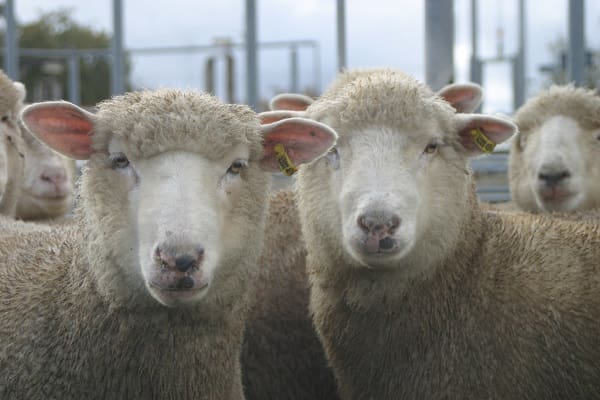
Lambs with electronic ear tags.
QUEENSLAND sheep and goat producers have backed a New South Wales push to delay the mandatory electronic identification rollout by two years to 1 January 2029.
NSW Farmers conference delegates in July this year voted to push back the 1 January 2027 deadline and AgForce sheep, wool and goat president, Boyd Webb, today said Queensland producers supported that approach.
Mr Webb said Queensland sheep and goat producers are set to face a significant change on 1 January 2027 when all sheep and goats, except for harvested rangeland goats, leaving a property will be required to be tagged with a National Livestock Identification System-accredited EID tag.
“This is the next stage of the mandatory EID tag rollout, which already requires sheep and goats born from 1 January 2025 to be tagged before leaving their property of birth.
“Currently, those born before this time do not have to be tagged,” he said.
“As producers make the transition, there is financial assistance available, with Queensland’s current assistance package providing a 75-cent discount on approved NLIS accredited EID devices.
 “AgForce supports better traceability and the role it plays in protecting producers from the impact of an emergency animal disease,” he said.
“However, there are legitimate questions around the merit of the January 2027 deadline.
“Animals born after 1 January 2025 are currently required to be tagged, so all this deadline will accomplish is to add an additional cost to producers, who would otherwise have complete adoption of EID tags in a few years, by requiring them to tag their older stock as they leave the property,” Mr Webb said.
“NSW Farmers has recently called for the implementation date to be pushed back from 1 January 2027 to January 2029, citing concerns about the readiness of the NLIS database, cost and the practical operation of the system.
“AgForce believes this would be the right move.”
Mr Webb said instead of pushing for 1 January 2027 deadline, the focus should be on looking at improvements that can be made to the NLIS system.
“Potential incorporation of ultra-high frequency (UHF) technology warrants further consideration.
“UHF systems have the potential to read multiple animals rapidly and could offer benefits beyond simple traceability, including faster drafting and handling, improved data collection, reduced labour requirements and better individual animal management,” he said.
“There is an opportunity to make EID a productive management tool rather than simply another compliance cost.
“A delay to the 2027 mandate would give producers, government and industry more time. Whilst traceability is important, producers should not be impacted for the sake of meeting an arbitrary deadline.”
HAVE YOUR SAY