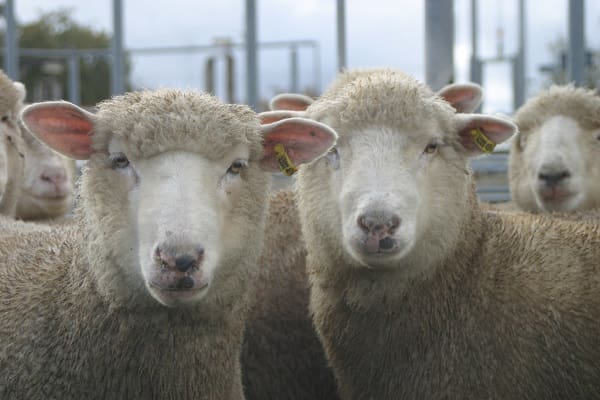
Lambs with electronic ear tags.
NSW Farmers members have voted to push back the 1 January 2027 implementation of electronic identification of sheep and goats by two years.
At the state farming organisation’s annual conference this week, NSW Farmers director and sheep producer Ian McColl said the association cannot support the current implementation date of 1 January 2027.
“We are calling on the NSW Government to push the date back to January 2029.
“To date, NSW Farmers has provided in principle support for a individual traceability system, but only if certain conditions were met; that it’s affordable, workable and backed by fit-for-purpose NLIS database,” he said.
“However, there have been delays to the critical NLIS Uplift Project, and producers continue to express wide-ranging frustrations with the ISC delivery and transparency.
“If the NLIS database is not fit-for-purpose, then the EID system is not fit for implementation on 1 January 2027,” he said.
Mr McColl said there is also an increasingly disproportionate cost burden for farmers, and members have serious concerns about the integrity and accountability of key players in the supply chain.
“Unless the NSW Government steps in, EID tags will be mandatory for all sheep and farmed goats in less than six months, and as input costs outstrip inflation, farmers are fighting an uphill battle to front up for the costs of this government mandate.”
As well as the reinstatement of the EID tag discount scheme, Mr McColl said a series of other measures – such as EID tag-free pathways for sheep moving from their property of birth direct to slaughter – must be delivered if the traceability scheme is to succeed.
“The national EID reforms was intended to strengthen Australia’s traceability and biosecurity systems, but unless we see practical implementation settings and sustained investment for producers to transition to the new system, we have little confidence the current approach will deliver on that objective.
“Producers have been clear about the challenges that remain, and those concerns must be reflected in the implementation pathway.”
Are we going to tag the pigs and the kangaroos because they are our biosecurity risk? They bust fences for sheep to get through.
Our farmers are being executed by the government to create jobs for all this illusion to suck money off the farmers. We are third generation farmers and now trying to survive. W need the government to support the farmers, instead of wasting taxpayers’ money on terrorists. We feel we are working for nothing.
One hundred percent spot on, the National Livestock Identification System only did one thing; it made tag manufactures richer. Primary producers don’t get any more for the stock. My goat and sheep tags went from 40 cents/head to $2.40/head. The old system worked. I wish they’d stop trying to reinvent the wheel.