
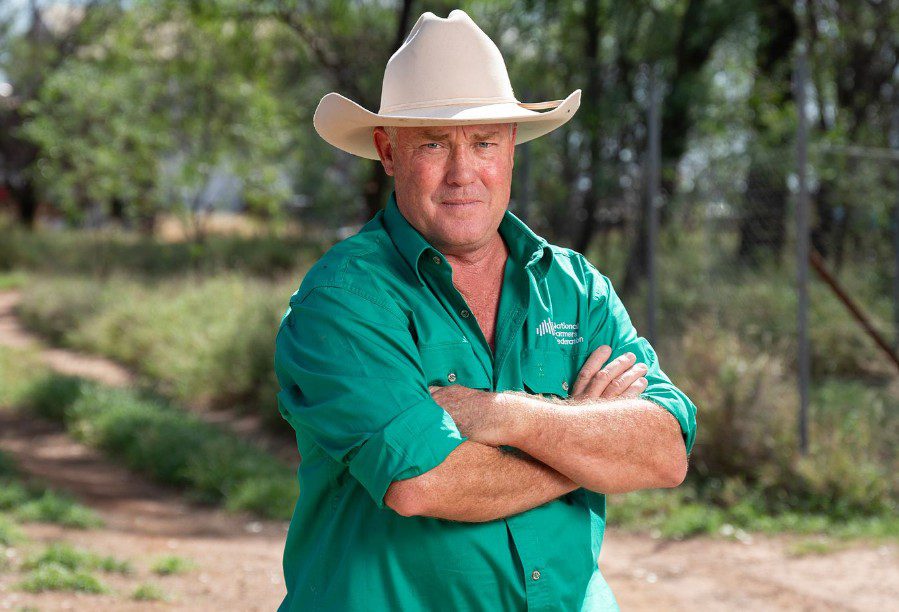
NFF president Hamish McIntyre.
AUSTRALIA’S peak farmer body has rejected Prime Minister Anthony Albanese’s assertion that the Federal Government had struck the right balance between limiting immigration and the economic impact of visa restrictions.
However, Mr Burke said Working Holiday Maker visa processing times would be stabilised to three months and skilled visas would proceed at “normal processing speed”. And the WHM program will include a ballot system and caps for visa holders returning for a second and third year.
National Farmers Federation president Hamish McIntyre told Sheep Central today the NFF did not believe the government’s visa changes have struck the right balance for agriculture.
Mr Albanese told the ABC’s national political lead David Speers on the Insiders program on Sunday that immigration plays an important role in the Australian economy.
“It’s important to get the balance right.
“We’ve done that; we’ve reduced the net overseas migration already by 45 percent,” he said.
“We want make sure as well that people who should leave do leave; so to stop visa hopping.”
Mr Albanese said One Nation’s net-negative migration (for three years) would be diabolical for the economy and have real consequences for issues such as aged care, health care, hospitality and the agricultural sector.
“We will put forward the case, for example, our farmers need the areas (workers) to come in if they are going to have their crops picked.
“That is just something that the farming sector are telling us and is something that is a reality, as well as a range of other areas as well, including in the care sector, as well as a role for programs like the PALM scheme, allowing Pacific workers to come in as well,” Mr Albanese said.
NFF not consulted on visa changes
Mr McIntyre said the NFF was not provided with the government’s legislative visa proposals prior to the announcement of the regulatory changes by Mr Burke.
“The NFF was not proactively consulted on the likely impacts these changes would have on farm businesses, agricultural production or regional communities before they were announced, and we weren’t privy to any of the detail,” he said.
Mr McIntyre said Working Holiday Makers are a critical part of the agricultural workforce.
“In horticulture, they can make up to 80 percent of the workforce during peak harvest periods, while around 26pc of red meat businesses rely on backpackers during busy periods.
“Any reduction in workforce availability creates workplace health and safety risks as farmers and family members work extra hours, and can pull back production,” he said.
“The NFF supports a well-managed migration system, but we do not believe these changes have struck the right balance for agriculture.
“Working Holiday Makers are an essential part of the workforce mix and complement other programs, including the PALM scheme, helping fill gaps that local workers alone cannot meet, particularly during seasonal periods,” Mr McIntyre said.
“Farmers are already reporting concerns about the impact these changes are having on workforce availability, farm productivity and business confidence.”
Mr McIntyre said the NFF is raising its concerns directly with the government and all sides of politics.
“We are taking examples straight from the paddock, packing shed, cotton gin and dairy, via our members, to policymakers to demonstrate the impacts being felt on farms and in regional communities.
“We are also working with organisations across the economy, including tourism, hospitality and small business, to advocate for a practical approach that recognises the important contribution Working Holiday Makers make to Australia’s workforce, food security and regional economies.”
Albanese insists there was ‘proper consultation’
Mr Albanese also said on Insider that the government had tried to legislate for stronger measures, but there isn’t support in the Senate. When asked why the government did not put legislation before parliament and challenge the Opposition to vote against it, the Prime minister said “they have said that they will vote against it.”
Mr Albanese said it was “not true” that the Opposition had not seen the proposed legislation. He insisted there was “proper consultation” with the Opposition and the government was “not able to achieve the outcome that we sought and hence why we went down the regulatory road, which was available to us.”
PM failed to display clear grasp of consequences – Duniam
Shadow Minister for Home Affairs and Immigration Jonno Duniam said Mr Albanese said the Coalition has not been provided with specific legislation to consider in relation to Working Holiday Maker visa changes.
“It is very concerning to us that the significant recent changes to the Working Holiday Maker program appear to have been developed without anything like the sufficient or appropriate level of consideration of their likely impact on Australian agriculture, including any assessment of their economic cost.
“This was reinforced by the comments of Prime Minister Albanese on Insiders on 20 September – when he failed to display any clear grasp of the consequences,” he said.
“People in primary industries across the country have rightly been sounding the alarm that delays to Working Holiday Maker visas are making it substantially more difficult to secure workers – particularly as crucial harvest periods approach.
“The National Farmers Federation estimates overseas workers even account for as much as around half of the casual workforce during peak harvest periods,” Senator Duniam said.
“Clearly, the overall migration numbers need to be lowered significantly in the wake of the completely unprecedented and mismanaged increases under the Albanese Government.
“However, these changes also need to be made intelligently, targeting the areas where numbers have become unsustainable rather than indiscriminately slashing workforces and visa pathways that are demonstrably important to productive sectors of the economy.”
HAVE YOUR SAY