
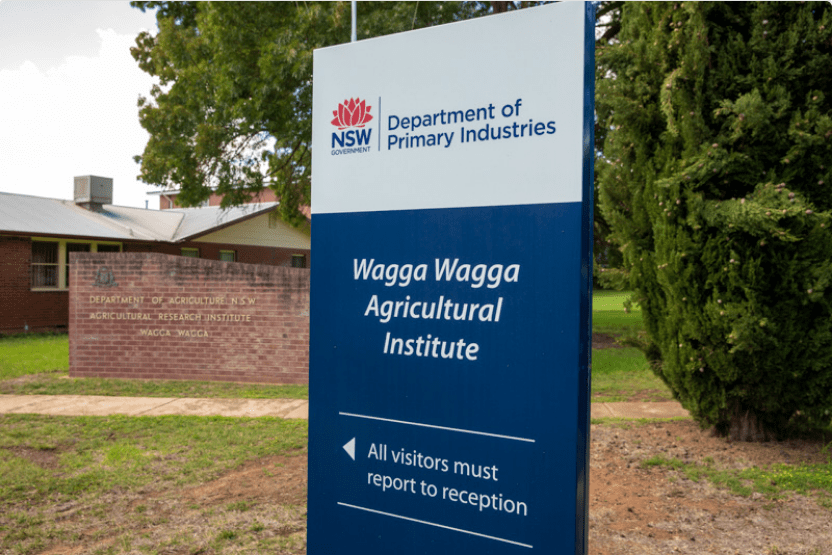
NSW DPIRD is set to cut staff working in roles at its sites throughout the state.
THE NEW South Wales Department of Primary Industries and Regional Development DPIRD is facing a wave of uncertainty, with details yet to emerge on which divisions will be impacted by the proposed cut of 165 jobs.
News of the flagged cuts emerged this week, coinciding with an announcement that TAFE NSW would shed 100 non-teaching roles, and came just days after Transport for NSW revealed plans to cut 950 positions.
The proposed cuts to NSW DPIRD would represent a reduction of 4 percent of total staffing.
It remains unclear where the cuts will be made, or what impact they may have on service delivery to farmers.
A NSW DPIRD spokesperson indicated that changes “will include a realignment of staff structures in several divisions across the department”.
 “Some staffing changes are related to temporary roles,” the spokesperson said.
“Other impacts include back office administrative roles and roles where duplication exists.”
The spokesperson said there will be no changes to office locations and the final number of impacted staff “will be determined following the consultation and feedback process”.
“Comprehensive consultation will be undertaken with impacted staff and public sector unions, with feedback incorporated into final plans.”
Despite no mention of research being impacted by the cuts, Grain Central has been told the restructure was looking like a near complete dismantling of the sector, with very heavy losses likely in research scientist ranks.
Conversely, government sources have indicated more middle management jobs are being created during the process.
Significant changes at DPIRD
Minister for Agriculture Tara Moriarty and DPIRD secretary Steve Orr were heavily questioned about the potential for departmental job losses and the alleged declining staff morale at Budget Estimates in February.
Mr Orr said that the department had “challenges in terms of its budget position” when it came to using temporary funding for people in permanent roles.
“Those challenges are largely inherited because, in certain parts, there was an overspend issue, in other parts there were issues about putting people into ongoing roles where we only had temporary funding,” Mr Orr said.
“We need to work through those issues as a department.”
Ms Moriarty said there were “movements in the department” and reiterated her party’s commitment to reduce “senior executives across government”.
“We have a role to play in this department to do that,” Ms Moriarty said.
“There has been a reduction in the senior-executive level in the department that’s in line with what we told the community we would do.”
She said that there had been “significant change” at the department during the past two years, which was “having a positive impact on how this new department provides services to the people of NSW”.
R&D budgetary pressures
The news comes a month after an independent report recommended a major overhaul of R&D at NSW DPIRD, citing persistent budget shortfalls, an ageing workforce and shortcomings in governance and financial oversight.
Commissioned in June last year, the review was led by former NSW chief scientist and engineer Professor Mary O’Kane and tasked with finding ways to focus research effort on government and industry priorities, diversify investment and improve outcomes.
The report found that “much-needed reforms” included budgetary measures due to it “running at a projected deficit over the forward years of nearly 50 percent the value of its entire program”.
“There is an immediate need for change to address critical gaps in governance, financial management and reporting to align the department’s research and development programs with contemporary issues and modern scientific standards,” the report said.
“The current program is significantly more expensive than the available budget and the focus and spread of activities do not reflect current priorities.
“Changes in both areas are necessary and unavoidable.”
The report highlighted the growing issues with the department’s assets, which have “increasing maintenance liabilities” while “providing marginal and diminishing benefits for the state”.
“It is unlikely that the current set of research assets will be required in full for a research program focussed on contemporary priorities.”
It also called for a realignment to “reflect current and likely future priorities” with the existing program having a limited ability to “invest in research that focuses on broad-reaching and complex issues” such as climate change, biosecurity management, and ecological restoration.
“The current breadth of research and the long-term misalignment of staff, operating expenditures and the maintenance costs associated with ageing assets has left little scope for strategic investment and new priorities.”
Industry concerned
Representative organisation NSW Farmers said it was seeking more information from the NSW Government on the scope of the job cuts.
“We are also keen to understand what this decision means for the thousands of farmers across the state who rely on the support and expertise of departmental staff, particularly in agriculture and biosecurity,” a NSW Farmers spokesperson said.
“There is enormous economic potential for agriculture in NSW, with our goal to grow to $30 billion by 2030, but we will only get there with the appropriate support and investment from the NSW Government.
“It is critical that any staffing changes do not negatively impact the delivery of frontline services for farmers.”
HAVE YOUR SAY