
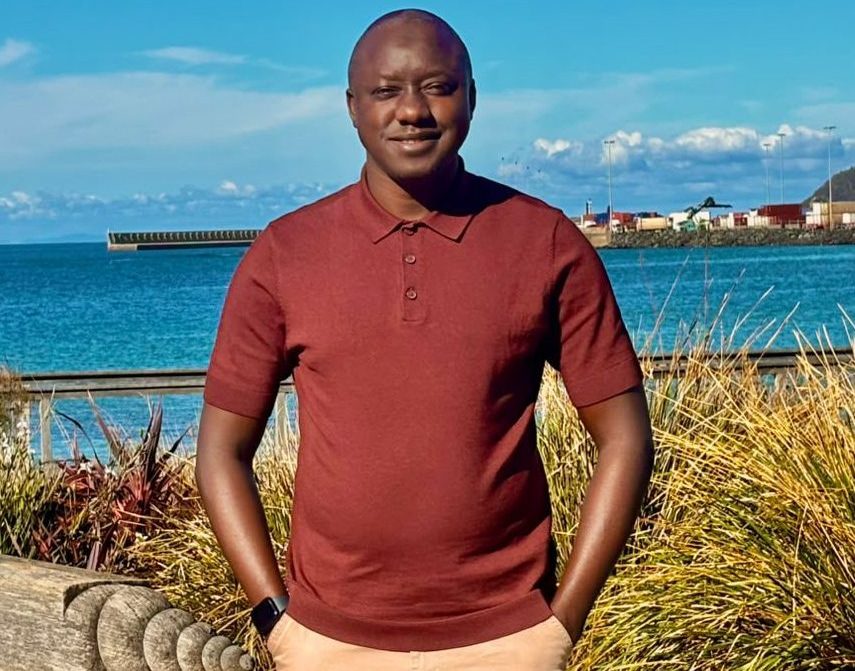
TIA researcher Ibrahim Ahmad
INTRODUCING sheep gradually to bromoform-based methane-curbing supplements, such as asparagopsis, helps overcomes feed refusal, according to new Tasmanian research.
The work by researchers from the Tasmanian Institute of Agriculture possibly solves a problem unearthed in earlier studies that recorded notably lower dry matter intake (DMI) in sheep fed bromoform-based supplements.
The TIA scientists suggested that a slowly introducing supplements, while adding rumen modifiers such as grape marc or biochar, resulted in up to 16 percent variation in DMI levels.
The team shandied various mixtures of supplements and modifiers and reported that animals initially reluctant to eat the supplements returned to normal DMI after 31 days.
The researchers found that a slow transition period using only a bromoform-based supplement increased weight gain. Co-supplementation with rumen modifiers minimised some negative effects of high bromoform concentrations, they reported.
Research lead, Dr Ibrahim Ahmad said: “Including bromoform-based feeds has shown remarkable efficacy in reducing enteric methane emissions from ruminants; however, several studies have also reported negative impacts on animal performance.
“Understanding the effects of the supplement on feed intake is crucial for practical implementation in livestock production systems.”
The research results were published this week in CSIRO’s journal Animal Production Science.
The researchers focused on 28 Merino ewes eating a high-forage diet. They tested for metrics such as DMI, liveweight, average daily weight gain and gain-to-feed ratio.
The animals were fed pelleted supplements ranging from 8.3 to 16.6mg/head/day for 31 days, followed by 16 days at 24.9 to 33.12mg/head/day.
Bromoform-based feed additives are effective at mitigating methane emissions from ruminants, although the TIA researchers did not measure emissions outputs in this study.
They have suggested that measurement be included in future studies.
The research was supported by the Tasmania Agricultural Development Fund (Hobart, Australia). Dr Ahmad also received a grant in the form of a top-up stipend from the Tim Healey Memorial Scholarship, awarded by the A. W. Howard Memorial Trust, recognising his contributions to promoting sustainable agriculture in Australia.
The other team members were Richard Rawnsley, John Bowman, James Hills, Orlin Todorov, and Apeh Omode.
You can read the full report here.
HAVE YOUR SAY