
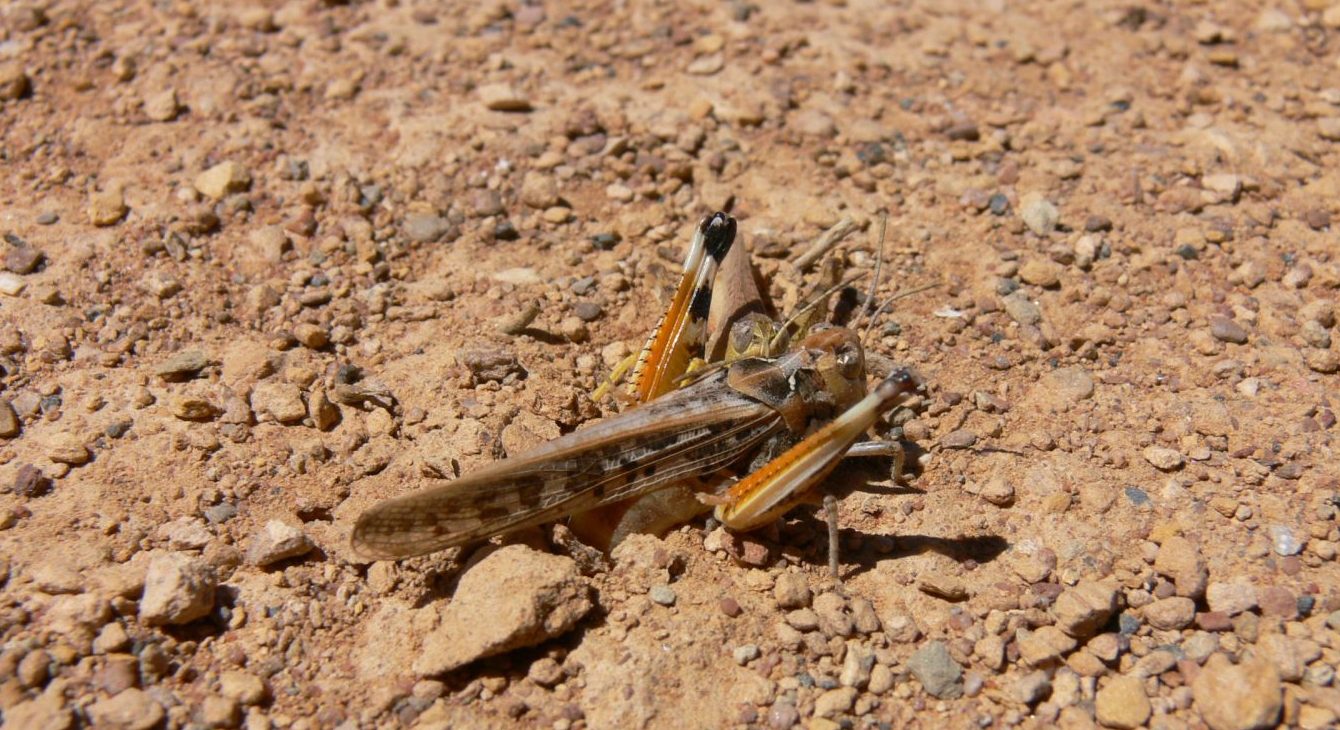
Increased activity of Australian plague locust reported across SA. Photo: PestFactsSA
GRAIN Producers SA is urging farmers across South Australia to report locust activity, following increasing numbers across several cropping regions during the early stages of seeding.
Growers are also being encouraged to watch for mouse activity as industry groups wait for the Australian Pesticides and Veterinary Medicines Authority to rule on permits for ZP50 baits.
GPSA chief executive officer Brad Perry said grain producers from the Riverland, Mallee, Eyre Peninsula, Flinders Ranges and Yorke Peninsula had to date reported locusts on farm to the peak body.
“Initial indications are that these locusts may have moved into South Australia from interstate where activity has been building,” Mr Perry said.
“We’re seeing reports across multiple regions, which suggests this isn’t an isolated issue and reinforces the need for a coordinated and proactive response.”
Brett Morris from Nutrien Ag Solutions told a recent GPSA webinar that reports suggested locusts were moving across the border from western parts of New South Wales.
“Our guys in Port Augusta who…head east are getting covered in locusts daily in their vehicles,” Mr Morris said.
“Make sure you’re monitoring and…talk to agronomy teams about how you manage those locusts if they do arrive.
“Border spraying with a fipronil is our advice, making sure you are getting them between the eggs, between hatching and flight.”
Mr Perry said GPSA was encouraging growers to monitor paddocks closely, particularly during early crop establishment.
“It is critical that grain producers report locust sightings on their farm to the PIRSA Exotic Plant Pest Hotline on 1800 084 881, as this will ensure a cohesive response.
“We’re urging grain producers to stay vigilant during seeding and early crop establishment, particularly looking for, and reporting, egg-laying activity, hopper bands, adult swarms and high densities of the pest.”
PIRSA survey teams are being deployed to assess the extent of locust movement and better understand numbers and distribution.
At this stage, the situation is not being classified as a locust plague or outbreak, with authorities responding to a migration event involving adult locusts rather than an established infestation.
“Early action and reporting will be key to preventing what could become a much broader problem for South Australian grain producers.”
The Australian Plague Locust Commission has reported two nights with wind conditions suitable for locust migration south-west into SA on April 21 towards northern Eyre Peninsula regions and April 24, with further warm winds across Saturday and Sunday, conducive to locust movement into the Riverland and Mallee.
PIRSA says that while there is currently limited data on population build-up in outback source areas, the scale of movement into cropping zones suggests favourable breeding and migration conditions.
The South Australian Research and Development Institute’s recent locust update states that many emerging crops were “now exposed to migrating adult locusts”.
“Adults are highly mobile and can move quickly between paddocks and districts, readily reinvading treated areas and feeding on establishing crops and pastures, particularly where local densities are high,” the update wrote.
“Warm daytime temperatures (above 20°C) and light winds are likely to further encourage local movement.
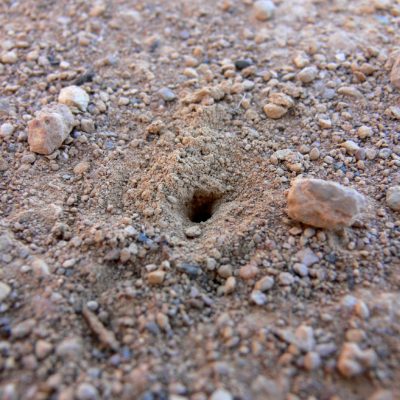
Locust egg laying hole. Photo: A. Harvey via PIRSA
“Egg-laying is also likely to occur over the coming weeks, typically in hard, bare ground where adults tend to aggregate such as: tracks, fence lines and sparsely vegetated paddocks.
“These eggs will enter a winter diapause and are likely to hatch in early spring (August to September), potentially leading to a renewed increase in locust activity.
“Marking these areas now will assist with monitoring and management at spring hatch.”
Mouse plague update
Mr Morris also gave an update on mouse activity during the webinar.
GPSA earlier this month called on growers to watch for mouse activity after CSIRO forecasts indicated moderate to high and rising populations across the Adelaide Plains and Yorke Peninsula.
“The reports are varying in location; top of the Peninsula and the Mid North.
“Not so much from the Mallee, but it’s very sporadic at the moment.
Mice numbers, as we know, build quickly…if the conditions are right for them, and they have been with that early rainfall.
“We urge our customers and all customers to monitor their paddocks.
“If you’re unsure what to look for and how to look for it, please speak to your retailer, get your agronomy teams…into your fields to have a look.”
Bait supplies
Mr Morris said there were “no issues” with supplies of Z25 mouse bait, which is currently available to growers under permit.
He said they were watching and waiting for a possible permit for Z50 bait, which is currently under assessment by the APVMA.
He said the Z50 could be supplied to growers “within days” of the permit being approved.
Mr Morris said the supplier who provides the Z25 baits is also able to produce the Z50.
“He’s got Z50 produced ready to go because they’ve been actually talking about it in Western Australia already, so he’s got bait ready to go.
“If it was required and the permit was ticked off today; the end of the week, or early next week, we would have product in South Australia.”
Grain Central: Get our free news straight to your inbox – Click here
HAVE YOUR SAY