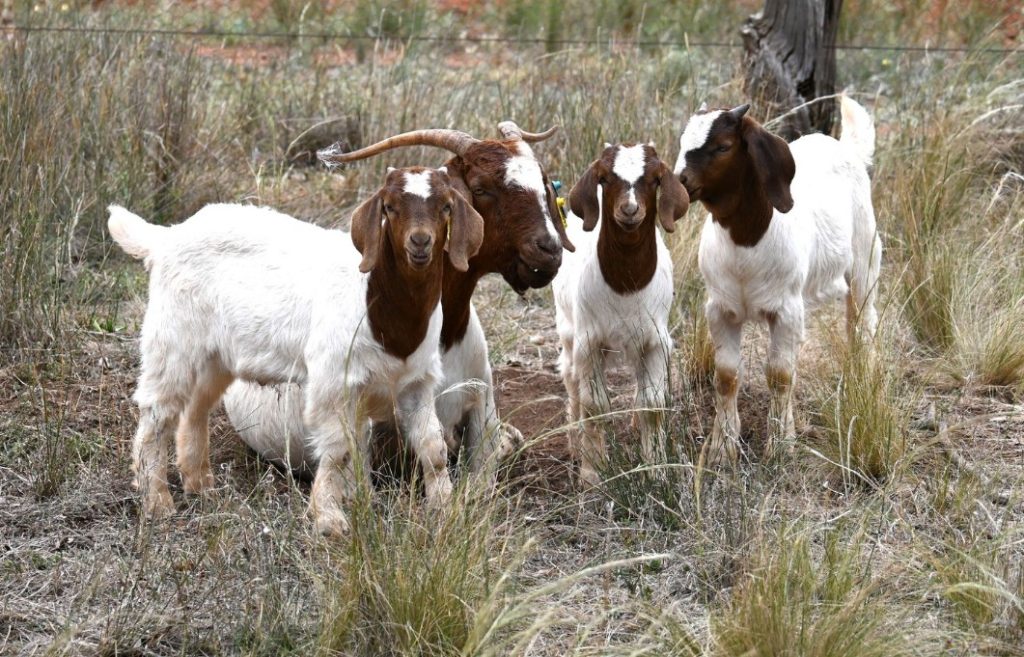
A good out-of-season breeding result has brought genomic breeding values for goats closer. Image – NSW DPIRD.
MATURE meat goat does have raised kids from three joinings in two years using out-of-season mating as part of a research program to develop genomic breeding values.
The NSW Department of Primary Industries and Regional Development Measured Goats project has achieved one of its strongest conception results, thanks to an expert-driven breeding management program.
 The most recent out-of-season mating of the project’s goat herd at Condobolin, in Central West NSW, recorded average conception rates of 85 percent for maidens, and 90pc for mature does.
The high conception rates provide a boost to the number of data records available from Cohort 3, allowing researchers to build a comprehensive database toh will help deliver modern genetic selection tools for the goat industry.
However, project leader Dr Tom Granleese said the unconventional timing of the joining in September last year initially attracted doubt from many.
“A lot of people from the industry were worried we would not achieve a single kid from this joining given it was out-of-season.
“The thinking was that combining non-cycling does with the low libido of bucks during that period would result in much fewer becoming pregnant,” Dr Granleese said.
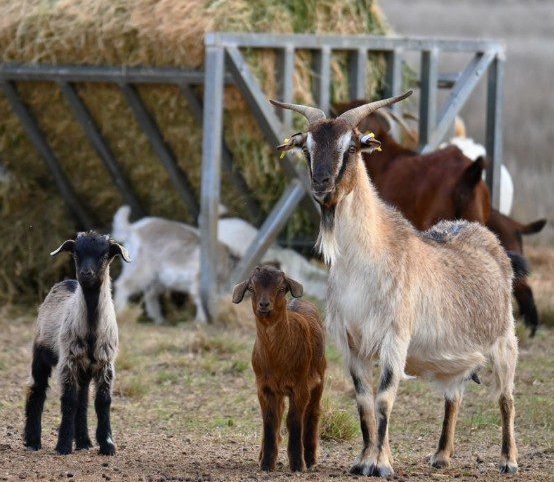
A feeding and management program has given a good out-of-season mating result. Image – NSW DPIRD.
The NSW DPIRD Measured Goats team devised a breeding management program with the aim to increase conception rates.
The team joined 1476 does, with an almost even split between maiden project-born does and mature does.
Dr Granleese said while they were apprehensive about the results on pregnancy scanning day, the surprising outcome from this third cohort in the project proved to be one of the most successful.
“While we expected lower conception and litter sizes in the maiden does compared to the mature aged does, we were thrilled with the result which netted us 2600 foetuses from 1304 pregnant does,” he said.
“The truly remarkable feat of the mature does is that they will have birthed and raised three litters of kids in two years.”
Does kept in condition score 3-plus
Dr Granleese said the management program involved keeping the does in condition score 3-plus throughout with 6-in-1 vaccinations one month prior to kidding.
“Keep them healthy and they will look after you.”
He said teasers introduced for 14 days prior to joining @1.5 percent and does are joined to syndicates of bucks for two cycles (42 days) at 5-6pc.
“This high ratio is more about experimental design rather than high conception rates.”
He said kidding occurs over 50 days with 80pc born in first cycle and marking occurs 14 days after the last kid is born.
Dr Granleese said the teasers are introduced while kids are still on mothers and weaning occurs 35 days after the last kid is born. The next joining of bucks occurs the day kids are weaned.
Because bucks are seasonal breeders, but does will ovulate if there is male sexual activity, for out-of-season joinings, Regulin is used in the teasers and bucks.
The next Measured Goats field day is on 16 September at the Condobolin Research Station with some leading scientists organised to crunch the data – UNE meat scientist Professor Peter McGilchrist (meat science), Dr Sam Walkom on genomics and Dr Granleese on genetics and systems. Kids from sire lines will be penned for inspection and there will be barbecued goat meat for lunch.
The research herd is on track to deliver at least 8000 weaned kids by October 2027 to create the initial building block of data to facilitate genomic breeding values. It is hoped to have weaned 4200 kids from the project by June, with the next kidding occurring in November this year.
Given the goat industry has had little performance or genetic benchmarking, DPIRD said the project is giving goat breeders access to the science and selection tools —which already exist for sheep and cattle enterprises — to make rapid genetic progress.
The Measured Goats project is funded by the NSW Department of Primary Industries and Regional Development and Meat & Livestock Australia via the MLA Donor Company.
Visit the NSW DPIRD website to learn more about the Measured Goats project.
HAVE YOUR SAY