
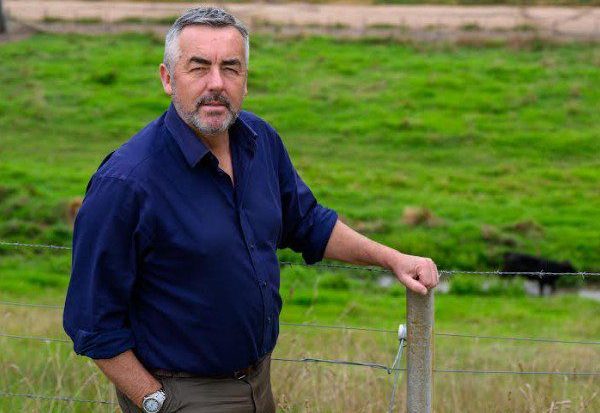
Nationals deputy leader and agriculture spokesman Darren Chester – no livestock gene bank funding commitment.
NEITHER the Albanese Government nor the federal Liberal-Nationals Coalition has committed to funding a livestock gene bank in Australia, despite wide industry support for the concept.
Before the 2022 federal election, the Coalition pledged $8.2 million over four years to create an agricultural – livestock and pasture — gene bank, should it be re-elected.
And a 2022 CSIRO report that recently surfaced – Business case for Australia’s livestock gene bank – has recommended Australia establish a centralised gene bank (registry and storage), with additional decentralised storage, as it had the most support among stakeholders.
Since the CSIRO report surfaced, a Department of Agriculture Fisheries and Forestry spokesperson has acknowledged that a livestock gene bank was a priority of the previous Coalition Government, but that Australia’s biosecurity system is built on shared responsibility, with well-established arrangements in place to support states and territories, and industry to prepare and respond to emergency animal disease threats.
“As part of this, Australia imports significant quantities of livestock genetic material each year, and there are also significant quantities held on hand by Australian livestock genetic material suppliers,” the spokesperson said.
The DAFF spokesperson said the Australian Government will never compromise on biosecurity, and has delivered over $2 billion in additional biosecurity resourcing since 2022. Questions to Minister for Agriculture, Fisheries and Forestry Julie Collins and her department on why the CSIRO report was not released and whether a gene bank could benefit Australia’s bird, poultry and mammal species at risk from H5N1 have not been not answered.
Livestock gene bank deserves ‘serious consideration’
Deputy Leader of The Nationals and Shadow Minister for Agriculture, Fisheries and Forestry Darren Chester told Sheep Central that a deteriorating global strategic environment and increased biosecurity risks have strengthened the need to fast-track the ‘National Food Security Strategy’ and elevate the issue of food and fibre security to a matter of national importance.
“The Albanese Government has talked about food security, but failed to deliver a national plan.
“The livestock gene bank was an initiative brought forward by the former Coalition Government, but it has not been prioritised for implementation by the Albanese Government,” he said.
“Given the arrival of H5 bird flu, the impact of recent natural disasters on livestock, and the ongoing risks posed by diseases such as foot-and-mouth disease, bovine spongiform encephalopathy and bluetongue, industry-backed biosecurity measures such as a national livestock gene bank deserve serious consideration as part of Australia’s broader biosecurity and food security framework.
“A gene bank is not a replacement for strong frontline biosecurity, surveillance, traceability, preparedness and emergency response arrangements, but it would provide an important additional layer of protection.
“It should be viewed as a form of insurance for Australia’s livestock industries, helping to safeguard valuable genetics that could otherwise be lost through disease incursions, major natural disasters or other biosecurity emergencies,” Mr Chester said.
“Protecting our livestock industries is not just about farm businesses.
“It is about protecting regional jobs, export markets, food and fibre production, and the future resilience of Australian agriculture.”
Why a livestock gene bank?
Australia has established the Australian Grains Genebank at Horsham in Victoria, and the Australian Pastures Genebank in Adelaide, but despite wide industry support for the concept, a livestock gene bank has not been pursued.
Genetics Australia chief executive officer Anthony Shelly believes that Australia should have a livestock gene bank, partially because of the uniqueness of the nation’s livestock genetics, across all the major farm animal species – cattle, sheep and pigs.
“There is a known genetics by environment factor that is real, and this means that the genetics that are here will perform differently to even our own genetics if they are expressed into a different region.
“I couldn’t see how that would different for sheep and/or pigs as well.”
He said dairy and beef cattle genetic material can be accessed globally, but this did not mean that political disruption might prevent that in the future.
“I think to ensure that we’ve got our Australian genetics in an environment where they are protected from disease outbreaks, I think it is an important thing that we should be investing in.”
Mr Shelly said since the risk of Foot and Mouth Disease and Lumpy Skin Disease heightened some dairy cattle breeders have invested in storing embryos to mitigate against an exotic disease incursion.
He said a livestock gene bank would be insurance for Australia’s food and trade security.
Mr Shelly said the lack of a funding commitment from either side of politics was “a dereliction of duty”, but it was also up to industry to manage its own risks in this area.
“And as part of that, Genetics Australia maintains a (semen) archive of all of the bulls that have come through our facility back to the early ‘60s.”
Although this was not done from a disease risk reason, it has enabled GA to develop genomics for the dairy population.
“I think in some part, industry is doing some of it, but is it doing enough of it?”
He said there could be a deficiency in the amount of northern cattle breed genetic material in storage, but also deficits in the amount of female genetic material store from all livestock breeds in Australia.
Hybrid gene bank model is ‘a logical choice’
Animal Genetics and Breeding Unit director Dr Stephen Miller said the hybrid livestock gene bank model seemed like a logical approach. Dr Hill said he recently toured America’s largest livestock gene bank, the USDA’s National Animal Germplasm Program (NAGP) in Fort Collins, Colorado, with animal geneticist and coordinator Harvey Blackburn. The centre was built to withstand a flood disaster, but without storages elsewhere represented “having your eggs in one basket.”
“If you’ve got fire insurance on your house and then you decide not to pay that insurance on your house – every year that goes by that your house doesn’t burn down, not paying for your house insurance seems like a good idea, because you’ve saved all that money.
“It’s a bit like that with a gene bank, you can save a lot of money every year you don’t have a gene bank, until you need the gene bank,” he said.
Dr Miller said an inventory needed to be taken of what genetic material is stored privately, then consider what is the probability of something happening and what would the insurance cost be. This needed to be considered against the value of industry genetics to the economy and the value of the genetics lost in exotic disease incursion or disaster could be “a big number,” he said.
Dr Miller said gene banks can also be used for research and to retrieve genetic traits that are not in current livestock populations.
A research paper co-authored by Mr Blackburn, ‘Conserving and reconstituting key animal genetic resources in an era of epidemic’, noted that in general, countries are not prepared to respond to large scale disasters impacting their AnGR (animal genetic resources) and the FAO has estimated 70 percent of countries lack disaster‑mitigation plans specifically addressing this. The paper noted that gene bank collections usually do not have sufficient germplasm to reconstitute populations on the scale needed after extreme disasters, therefore a paradigm shift is needed which requires increased numbers of animals and samples.
The paper concluded that safeguarding AnGR against epidemics and other disasters requires coordinated in situ and ex situ strategies, strong policy frameworks and proactive planning.
“Countries must identify key breeds and herds, strengthen biosecurity and early warning systems, expand and diversify gene bank collections, and establish clear procedures for post‑disaster reconstitution as there are a wide range of options that can be used in the reconstitution process.”
The One Nation Party’s Member for Farrer David Farley was asked for comment, but is yet to reply.
HAVE YOUR SAY