
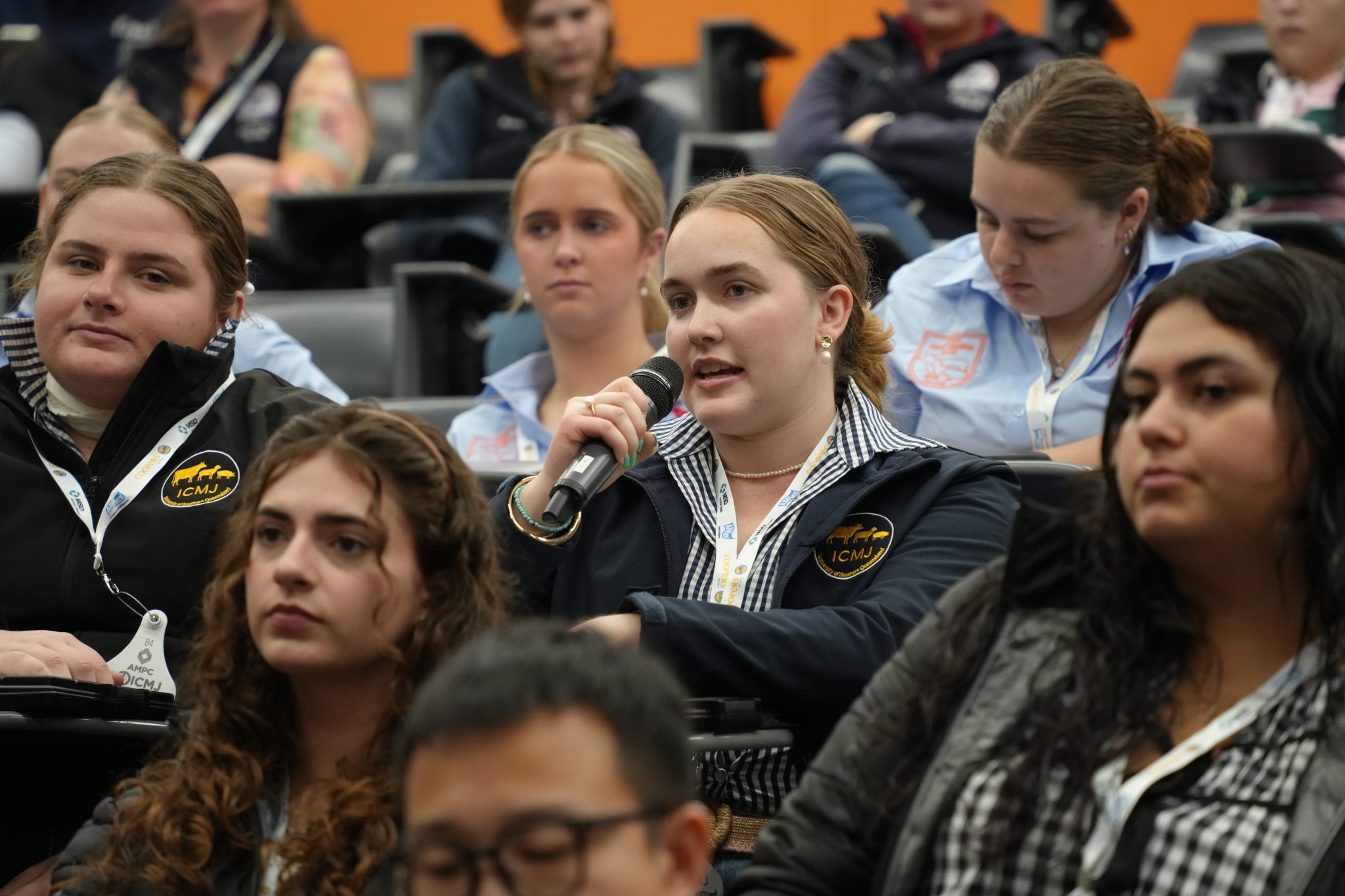
THE future of the Australian red meat industry is on display this week as university students from across Australia, Japan and the United States gather alongside young industry professionals for the 2026 Intercollegiate Meat Judging National Conference and Competition.
Now in its 36th year, the five-day intensive program serves as the premier launchpad for the next generation of red meat industry leaders.
This year’s event includes seminars, workshops, a careers expo, networking opportunities and the ICMJ National Meat Judging Competition which will include goat judging for the first time.
As outlined in a series of Q&A’s from a panel session below, students were interested in hearing about opportunities to improve meat yield, where the application of technology is heading in the beef industry, and possible solutions to labour challenges in processing.
ICMJ President and University of New England Professor of meat science, Dr Peter McGilchrist said the 2026 program reflected the accelerated pace of change within the sector.
“The industry our students are entering is vastly different from even just a few years ago,” Professor McGilchrist said.
“This week isn’t just about developing meat judging skills, it’s about equipping students and young industry professionals to navigate changes including the integration of AI in processing, advancements in methane-mitigating genetics, and the sophisticated data requirements of our global export partners.”
The conference agenda featured a high-level lineup of industry leaders, including Melissa Fletcher from Fletcher International Exports, Ripley Atkinson from StoneX, Dr Ben Holman from Charles Sturt University, Dr Michael Lee from MLA, Stuart Bisley from Teys Australia, Luke Leyson from Schlenk Smallgoods, World Champion butcher Brett Laws, Professor Mark Miller from Texas Tech University and more.
This year’s event has again seen record registrations with 160 total participants.
“The ICMJ mission is to attract, develop and inspire future meat industry professionals and it’s wonderful to see the level of interest and enthusiasm continue to grow each year,” Prof McGilchrist said.
“The passion that ICMJ alumni bring to the table is one of our industry’s greatest assets.”
Students quiz experts about the future
During the conference, students had the opportunity to ask a panel of industry experts questions about the future of Australia’s meat industries.
Here are some of the topics they explored:
Q. If you could choose or invent one piece of technology to make your job easier and progress the industry, what would that be?
A: “There is some tech starting to emerge that would make my job easier, which is around being able to predict the weight of a live animal,” speaker Stuart Bisley from Teys Australia said. “During our recent ICMJ tour to Japan we saw some pretty cool tech they are using on wagyu cattle over there, so I’m sure over the coming years will be some pretty cool off-the-shelf tech that you can have on your phone, to take a photo of an animal or a video of a range of animals, and it will give you an estimate of the live weight of those animals.”
Q. What gives you the most optimism about the future of the industry?
A: “I think all of you sitting in the room, you’re the next generation that will take on new innovation and technologies and apply it to how we do things in the industry,” Clara Bradford from Meat & Livestock Australia said. “We (the panel of industry participants) have all had the opportunity to be a part of new innovations and driving how industry adopts and uses new technology, and that’s exactly the place that you’ll be in in a few years.”
Q. What innovations does Australia need to keep its competitive advantage in beef?
A: “Beef has a long way to go in the yield space. In terms of measuring eating quality we’re world leaders with what we’ve got in terms of MSA, but we’re a long, long way behind in terms of yield,” Stuart Bisley said. “I saw some carcasses in the chillers here at Wagga with incredible marbling, but really poor in terms of the amount of fat that those animals are laying down. So, when I think about the future, what that looks like, and how we’re going to continue to compete or progress the industry, I think there’s massive opportunity in improving yield.”
Q. What do you see as the biggest challenge facing the red meat industry in the next 12 months, the next five years, the next 10?
A: “One of the biggest things for the processing industry is labour, so I am not sure if people understand the implications when they say they don’t want immigration,” Melissa Fletcher from Fletcher International Exports said. “That’s scary, because we are a small population. We need all different types, whether it’s the Pacific Australia Labour Mobility (PALM) scheme or Australian workers, we need people, regardless of how much innovation and technology we have, we still need people in the room.
“So I worry about labour and how politics could jeopardise the workforce programs. That scares me.”
Ripley Atkinson, from risk management service provider StoneX said he felt one of the biggest challenges the industry was facing was Government intervention, getting too involved in what Australians believe is fair trade. “That is an issue,” he said. “It’s happening around the world, it’s happening in America, it’s happening in Europe. That’s a problem.”
HAVE YOUR SAY