
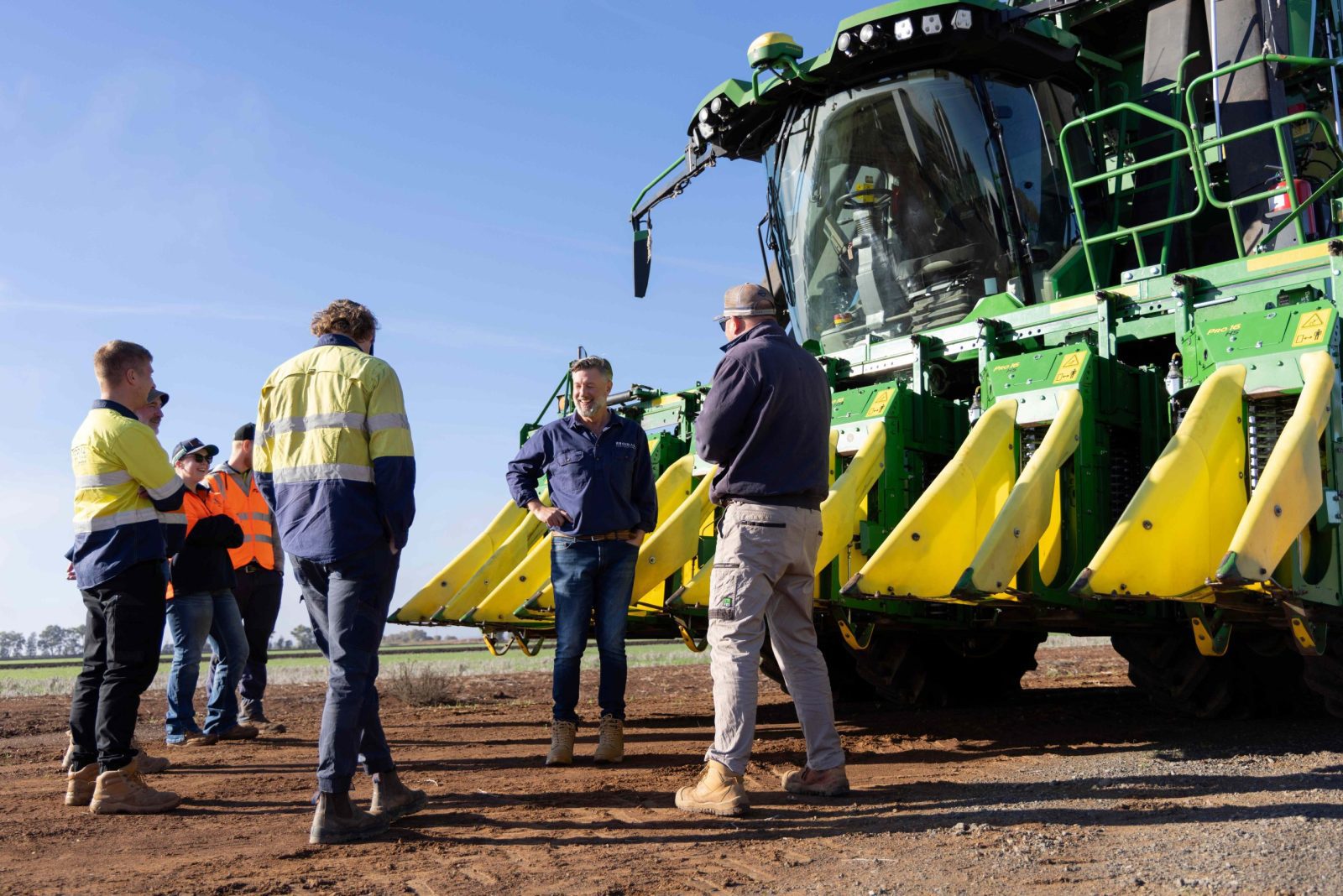
NSW cotton grower Gavin Dal Broi is calling on farmers to rethink the culture of pushing through fatigue and time pressure. Photo: Farmsafe Australia
EVERYONE involved in agriculture is being invited to put farm safety into practice to protect not just themselves but those around them by becoming a role model during and beyond National Farm Safety Week 2026, which kicked off yesterday.
 Under this year’s campaign theme, Set the Standard: Show ‘Em How It’s Done, Farmsafe Australia has chosen six Safer Farmers Ambassadors for the first time.
The six ambassadors are sharing their own experiences and practical insights into creating stronger safety cultures that spread beyond the individual.
Their messages about ways to improve safety are driven home by sobering statistics released in Farmsafe Australia’s 2026 Safer Farms Report, which reveals 53 lives were lost and a further 182 people were seriously injured on Australian farms in 2025.
This brings the nation’s farm death toll to 427 since 2019, more than one person per week for seven consecutive years.
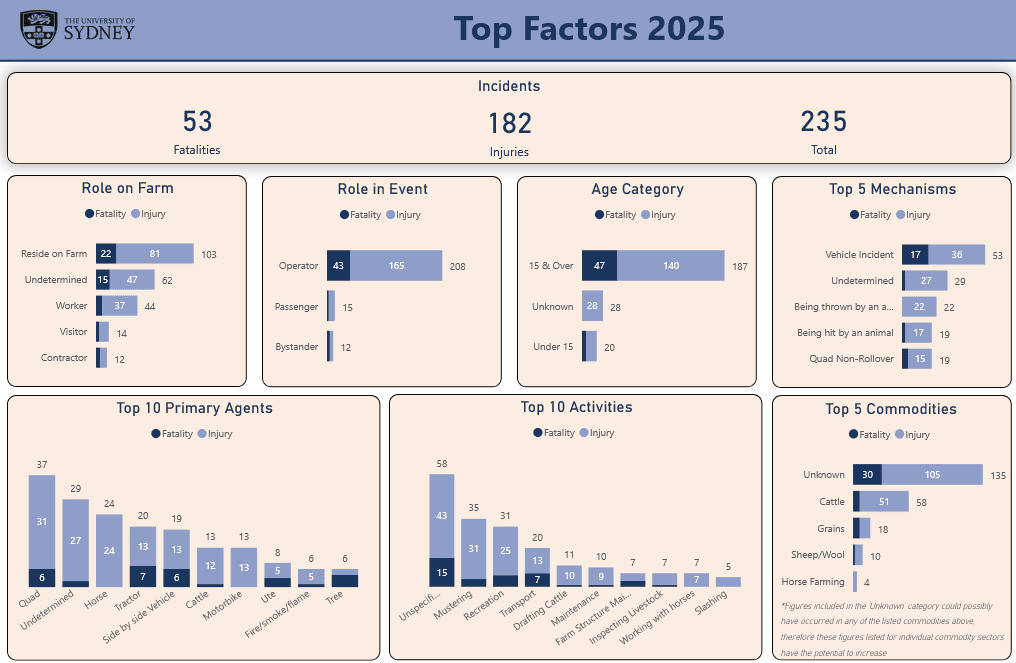
Source: The University of Sydney Rural Media Farm Injury Dashboard Report
Stick to standards set for safety
Farmsafe Australia chair Felicity Richards said the report highlights the challenges facing Australian agriculture, but also provides reason for optimism.
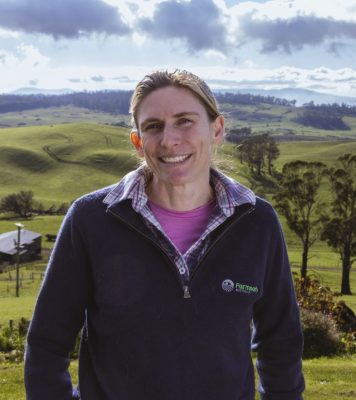
Farmsafe chair and Tasmanian farmer Felicity Richards. Photo: Farmsafe Australia
“Most incidents don’t happen because people don’t care about safety,” Ms Richards said.
“They happen during routine jobs, busy periods and moments of pressure when shortcuts begin to creep in.”
“Whether we realise it or not, those moments matter because they become the standards we set and the standards others follow. ”
“Every day on Australian farms, people are watching.
“They watch how we approach a task, how we respond under pressure, what we walk past, what we accept and what we choose to challenge.”
Tractors, side-by-sides and quads continue to be the leading causes of deaths on Australian farms.
Ms Richards said industry should therefore focus on the small, everyday behaviours that help build a stronger safety culture.
“It’s simple things like wearing a helmet, putting on a seatbelt, reducing speed and using rollover protection that can make a real difference.
“This isn’t about being perfect; it’s about being consistent.”
Ambassadors share different perspectives
Farmsafe Australia’s six Safer Farmers Ambassadors ambassadors come from a range of backgrounds, and Ms Richards said together, they demonstrate that safer farms are built through thousands of everyday decisions.
Poultry operations manager Brad Vinecombe, Pace Farm’s Hunter Valley-based regional farming operations manager, is encouraging farmers to pause and reassess before routine and pressure influence their judgement.
Queensland bull handler Sophie Halliday from Palgrove’s Glen Wilga Sale Complex near Chinchilla believes the small habits people demonstrate every day have the greatest influence on those around them.
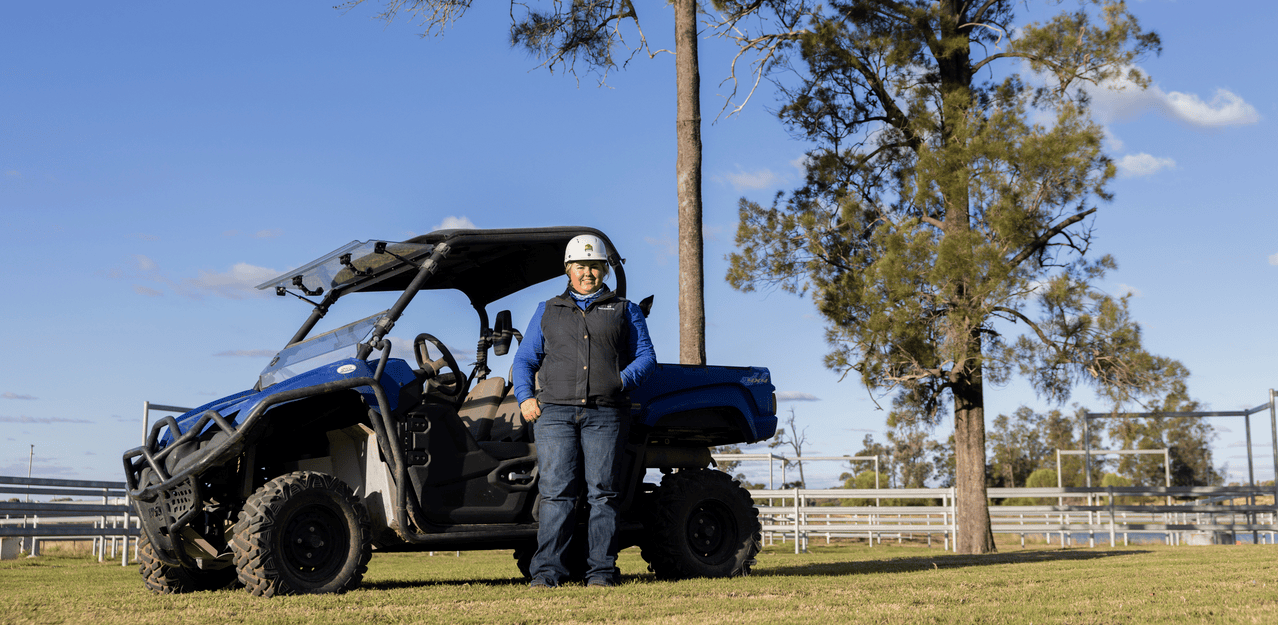
Bull handler Sophie Halliday follows the safety guidelines at Palgrove’s Glen Wilga Sale Complex on Qld’s western Downs. Photo: Farmsafe Australia
Tasmanian Northern Midlands sheep producer Josie Chester is reminding farming families that children are always watching and so it’s our job to set them up for success.
In the Riverina district of New South Wales, cotton grower Gavin Dal Broi is calling on farmers to rethink the culture of pushing through fatigue and time pressure, and avoid treating it as a badge of honour.
“If our three sons want to come back into farming and ag, hopefully we’ve left a legacy where safety
is very important; the shortcut isn’t worth it,” Mr Dal Broi said.
NSW cattle producer Katie Saul is based near Glen Innes and is encouraging farmers to recognise that safer cultures aren’t built with a tick and flick mentality.
South Australian Robbie Davis believes stronger safety cultures begin with stronger leadership throughout the entire agricultural sector; from boardrooms to conference stages, safety needs to be on the agenda.
Ms Richards said a safety culture is not built through posters or paperwork alone.
“It’s built through what people see; a helmet worn, a seatbelt buckled, a decision to stop and reassess, a conversation about fatigue or someone having the confidence to speak up.
“This National Farm Safety Week, we’re asking every person in agriculture to think about the example they’re setting, because the way we work today shapes the culture we’ll leave for tomorrow.”
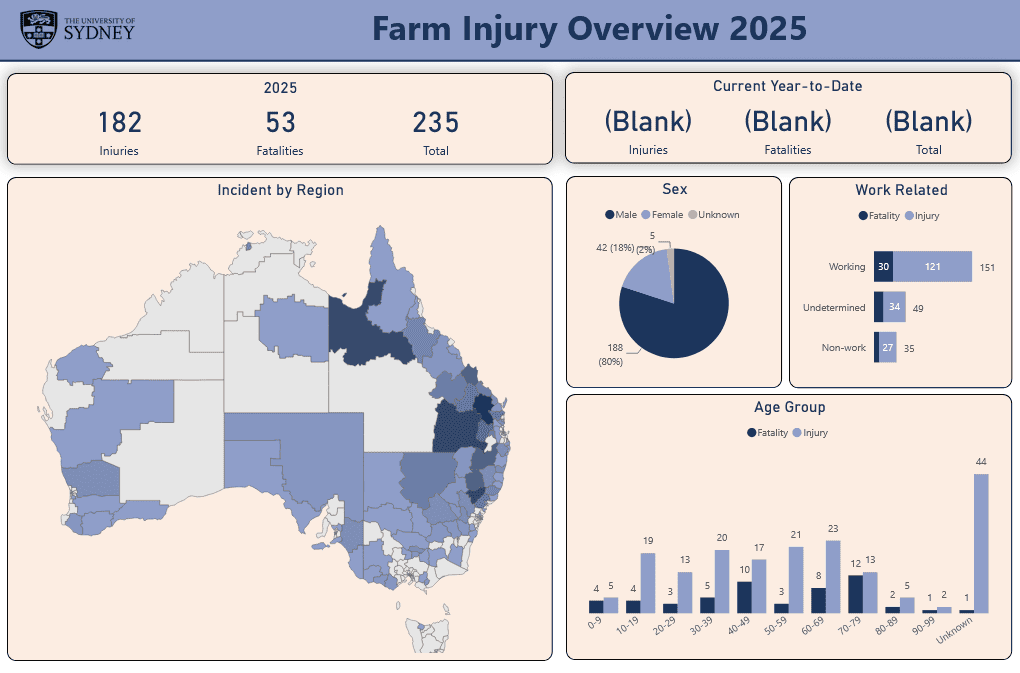
Source: The University of Sydney Rural Media Farm Injury Dashboard Report
The Safer Farms Report is supported by WFI Insurance, annually brings together the latest national injury and fatality data, emerging issues, information on practical resources and the voices of farmers leading change across Australian agriculture.
“This report combines evidence, practical ideas and the voices of farmers themselves to help strengthen safety across our industry,” WFI Insurance executive general manager Damien Gallagher said.
“Every conversation about safety has the potential to prevent an injury, strengthen a business and protect a farming family,” Mr Gallagher said.
VFF highlights child safety
To coincide with National Farm Safety Week, the Victorian Farmers Federation has urged farming families to keep child safe following a number of incidents during the recent school holiday period.
VFF president and grower Ryan Milgate said the recent incidents were a sobering reminder that on-farm safety must always remain the top priority.
“I can’t stress enough the importance of maintaining the highest possible safety standards on farm.”
“Every farm accident is shocking, but when it involves a child there’s nothing worse. During school holidays we tragically see more accidents involving kids and we need to do something about it,’ Mr Milgate said.
Mr Milgate said the incidents come as farming communities mark National Farm Safety Week, providing an opportunity to reflect on the importance of keeping everyone safe on Victorian farms.
“Farm safety isn’t about rules on a page; it’s about the people we love being able to come home at the end of the day.”
“I’m encouraging farming families to make use of the VFF’s Making Our Farms Safer project, which provides practical, free resources to help identify hazards and improve safety on farms.”
“Farmers can book a free farm safety visit and download the Child Safety on Farms Guide to help create a safer environment for children living on or visiting farms.”
“The MOFS farm safety visits encourage everyone on farm, including children to be aware of the dangers that exist and can tailor safety advice to suit everyone’s situation.”
“Every farm is different, but every family can take practical steps to make their property safer. Taking the time to review your safety practices now could prevent a tragedy in the future.”
Source: Farmsafe Australia, VFF
HAVE YOUR SAY