
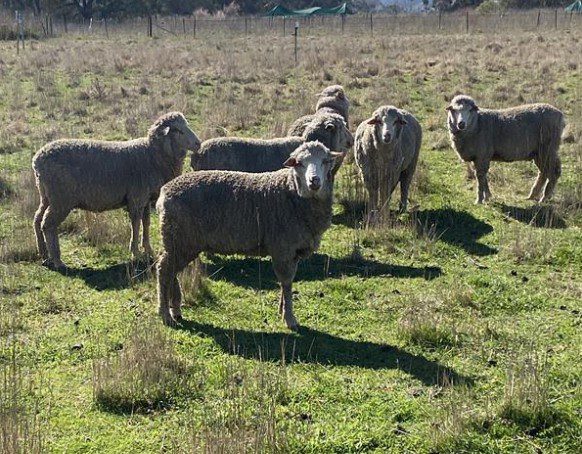
Sheep on the NSW DPIRD soil carbon trials. Source – DPIRD
MANAGED livestock grazing can incrementally increase soil organic carbon when compared to continual stocking, according to a new research paper released by the NSW Department of Primary Industries and Regional Development.
The NSW DPIRD also showed that while grazing management increased SOC in temperate pasture systems, land use change and seasonal conditions had far greater effects.
The study, examined long-term trends in SOC across a range of grazing systems and demonstrated systems with rest periods of 56 days and 15 paddocks had significantly higher SOC stocks than continuous grazing but doubling rest or paddock numbers did not further enhance sequestration.
The research plots were grazed with Merino wethers or dry Merino ewes. The animals generally entered the experiment at about 12 months of age and were retained for 2-4 years.
Treatments with low initial soil carbon levels proved highly responsive, capturing an average of 0.77 tonnes of carbon per hectare annually, with rates reaching 1.22 tonnes in optimal conditions. Promisingly, carbon sequestration continued even during drought, at 0.13 tonnes per hectare per year.
Improved grazing management directly contributed 0.1 tonnes per hectare per year, while environmental factors and land use change accounted for the remainder.
NSW DPIRD pastures research leader, Dr Warwick Badgery said the findings provide valuable insights for producers looking to understand the potential for soil carbon change in their grazing business.
 “This research reinforces what many landholders are already observing, well-managed grazing systems can contribute to soil carbon sequestration,” Dr Badgery said.
“High stocking rates did not influence soil carbon compared to low stocking rates, which is consistent with previous Australian studies but at odds with overseas studies.
“Bare ground was one of the strongest predictors of SOC change, with more bare ground associated with lower SOC stocks, highlighting the importance of maintaining groundcover,” he said.
As most of the gain in soil carbon were related to land use change and seasonal conditions, not grazing management, producers should not rely solely on grazing strategies to build soil carbon.
Grazing systems operate within a broader business context, so decisions around carbon management must consider not only carbon outcomes but also production goals, profitability, enterprise emissions, and future climate risks.
“It’s not just about grazing, it’s about the whole system,” Dr Badgery said.
NSW DPIRD continues to support producers through research, extension, and innovation to build sustainable and profitable farming systems across the state.
For more information on soil carbon research and pasture management strategies, please visit the NSW DPIRD website – https://www.dpi.nsw.gov.au/agriculture
To view the ‘Managed grazing incrementally increased soil organic carbon amid larger temporal trends in a temperate pasture system’, paper, please visit – http://bit.ly/4qkJ1sq
HAVE YOUR SAY