
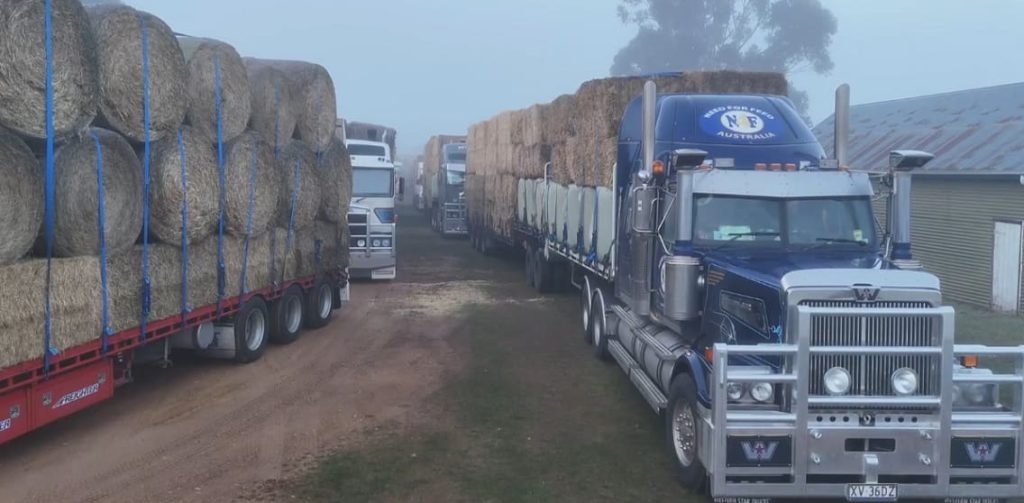
AUSTRALIA’S fodder industry has gained $1.69 million in Federal Government backing to develop a co-ordinated national system that supports better feed management before, during, and after drought.
The grant is part of $30 million in funding being delivered through two new programs of the Future Drought Fund.
The Australian Fodder Industry Association said the initiative will establish a national Fodder Community Network and digital platform to better connect producers, users and service providers across key agricultural regions.
Access to feed and fodder remains one of the most significant pressures on livestock producers during dry periods, the AFI said. When local supply tightens, it becomes harder to identify reliable sources, verify quality and move feed quickly to where it is needed. A fragmented system with limited visibility across regions adds to delays, cost and reactive decision making, the association said.
The AFI said the project will address these challenges by improving visibility of fodder supply and demand, strengthening co-ordination across the supply chain and supporting earlier, more informed planning.
AFIA chairman, Mr Gavin Schuster, said the project marks a practical shift in how the industry prepares for drought.
“This project moves fodder from a reactive crisis issue to a more coordinated national system,” he said.
“By improving transparency, trust and collaboration across the supply chain, we can better support farmers to manage dry conditions and protect livestock.”
The project will be delivered in partnership with farming groups, industry organisations and government stakeholders, with initial pilot activities in Victoria and southern New South Wales.
Better fodder supply chain co-ordination
The AFIA said practical outcomes of the initiative will focus on:
Better coordination between producers, end users and service providers
Clearer visibility of fodder supply and demand across regions
More consistent and reliable information to support decision making
Faster access to fodder during periods of shortage
The AFIA said over time, the model is expected to scale nationally, supporting a more coordinated and efficient fodder supply system and strengthening the industry’s ability to respond to increasingly variable seasonal conditions.
Five projects will share in $11.4 million through the Strengthening Drought Resilience on Country grant program, with delivery partners to work with communities to identify local priorities, co-design projects and build local capability.
Projects include developing a drought sensitivity mapping tool that blends cultural and ecological knowledge, and rewilding wetlands as drought and cultural refuges that hold food, fibre and medicine values.
This grant program was established in response to the Productivity Commission’s recommendation to include First Nations people in the Future Drought Fund and to broader government priorities to boost economic participation and foster genuine partnerships with First Nations peoples.
The Albanese Labor Government said it has invested more than $1.3 billion in rural support and drought resilience measures to help farmers prepare for, adapt to, and recover from challenging conditions since July 2022. These new Future Drought Fund projects will roll out across Australia over the next two years.
Drought Resilience and Innovation Challenges Pilot Program grant recipients include:
Arca Sustainability Pty Ltd: $286,605
Australian Fodder Industry Association Limited: $1,690,000
Berries Australia Limited: $813,006
Deakin University: $1,186,850
Department of Energy Environment and Climate Action (Victoria): $1,624,436
Desert Channels Queensland Ltd: $1,401,500
James Cook University: $1,599,407
Mallee Sustainable Farming Ltd: $1,997,000
Mollongghip & District Enterprises Pty Ltd – $1,972,625
Outback Academy Australia Limited: $1,943,000
Riverine Plains Incorporated: $1,986,020
Seed Force Pty Ltd: $982,049
The University of Newcastle: $1,904,166
Strengthening Drought Resilience on Country grant recipients:
Barengi Gadjin Land Council Aboriginal Corporation RNTBC: $1,600,000
K Farmer Dutjahn Foundation Limited: $2,800,000
Northern Aboriginal & Torres Strait Islander Health Alliance Limited: $2,000,000
Tiwi Resources Pty Ltd: $3,000,000
Yarkuwa Indigenous Knowledge Centre Aboriginal Corporation: $2,000,000
Minister for Agriculture, Fisheries and Forestry Julie Collins said the funding through the Future Drought Fund will give farmers and communities access to innovative and capacity-building practices.
“These projects will help farmers and producers to boost their resilience, and to remain productive during challenging conditions.
“We heard about the benefits of supporting region-specific priorities at our National Drought Forum last year, which is why this funding is backing projects that will be developed for and with local communities.”
For more information, visit: Future Drought Fund – DAFF
HAVE YOUR SAY