
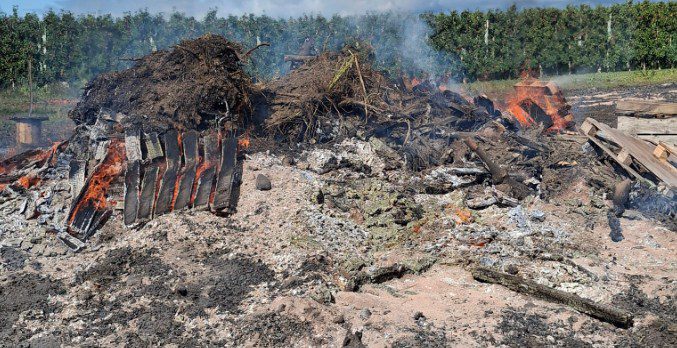
VICTORIAN livestock farmers looking to clean up after recent bushfires as fire restrictions come off have been warned burn piles can be a risk to their animals.
The warning from Agriculture Victoria came after several cattle deaths were traced to their access to a pile where treated pine posts had been burnt.
The agency said of particular concern are contaminants left in ash and debris from treated pine posts, which landholders may be burning after replacing fences damaged in recent fires.
Agriculture Victoria veterinary officer Dr Lydia Nicholson said a case near Wangaratta served as a sobering reminder of how well-intentioned actions can pose serious risks to livestock.
“During a disease investigation, several cattle were found dead after displaying severe neurological signs – staggering, blindness, and collapse,” she said.
“Post-mortem examinations and laboratory testing were conducted, but the key breakthrough came during a discussion with the landholder.
“It was revealed that a bonfire had recently been lit on the property, and the burn pile included treated timber.”
Treated timber, which is commonly used in fencing, yards and landscaping, is often preserved with copper chrome arsenate (CCA), a chemical that protects wood from rot and pests.
Dr Nicholson said CCA contains arsenic, that becomes significantly more toxic when the timber is burnt.
“Burning concentrates the toxin and leaves behind ash and debris that can be highly palatable to livestock.
“In this case, every animal that had access to the burn site died,” she said.
“This tragic outcome highlights the importance of being vigilant about what goes into your burn piles.
“Even small pockets of contamination can lead to fatal consequences when stock gain access.”
Agriculture Victoria said many common garden plants can also be toxic to livestock and access can be fatal, particularly on small properties where animals may reach household gardens or where clippings are dumped into paddocks or burn piles.
Dried clippings can pose an even greater risk, the agency said, as they often become more palatable while retaining toxicity.
Plants such as some sugar eucalypts, oleander, yew, foxglove and rhododendrons can cause severe illness or sudden death often affecting the heart, nervous system or gastrointestinal tract.
The agency said recently, a case was investigated where garden clippings containing Oleander was placed on a burn pile resulting in multiple deaths of horses on a property.
For further information contact your local veterinarian or Agriculture Victoria veterinary or animal health officer. Further information can be found at www.agriculture.vic.gov.au/livestock-and-animals
HAVE YOUR SAY