
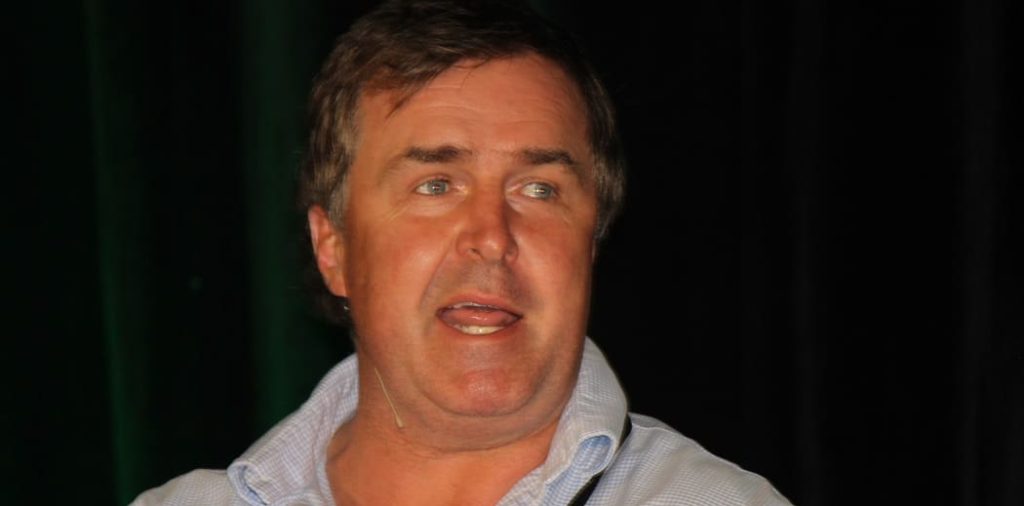
Lambpro general manager Tom Bull – carcase flow feedback and end-to-end information flow needed to attract and retain youth.
LAMB eating quality leader Tom Bull has raised the availability of carcase feedback and end-to-end information flow as major factors in keeping youth and sheep on Australian farms.
While several major lamb processors now have the ability to provide eating quality feedback on carcase lean meat yield and intramuscular fat, only one processor — Gundagai Lamb — regularly publishes a grid that pays producers on these traits, supplying full feedback to suppliers.
In a LinkedIn post this week, Mr Bull has proposed the formation of an industry standard in carcase feedback to producers.
Mr Bull posted that in his 34 years he had never seen an exodus from sheep like over the past three years.
“It’s clear lamb is losing the battle to cropping and cattle for attracting the brightest and best to the industry.
“One important ingredient from my experience is market connection and information flow down the supply chain,” Mr Bull posted.
“Lamb at nearly all levels is still traded like an archaic commodity and this isn’t helping attract young people to the industry.
“It would be great if, in the boardrooms of many retailers and processors, we could see changes with the adoption of technology to provide greater information and incentive to producers,” he said.
“We are finally seeing change in trading information with the likes of Gundagai Lamb but this needs to be an industry standard not an isolated example.”
Lamb industry needs to retain production and values – Howie
Mr Bull’s post received several comments of support, including from RMA Network chief executive officer Chris Howie.
“We need to actively retain our production levels and values,” Mr Howie said.
“Apathy has no place in agriculture. Well said Tom.”
Mr Howie shared Mr Bull’s post and has received almost 900 views up to this afternoon. He told Sheep Central he supported the formation of an industry standard for lamb carcase attributes feedback and believed it might get some opposition.
“If we could, without asking for it, on a kill sheet, get reporting on carcase attributes, I think that would be fantastic.”
Mr Howie said full carcase feedback would allow the producer/agency community to align production to a target market.
“And it will move the lamb product from a commodity-based product to a targeted premium product like beef.
You know you can go in and buy beef, you can buy export beef, but you can also buy Meat Standards Australia or marble (IMF) score (graded) beef – that’s where lamb needs to get to,” he said.
“That will benefit everyone.”
Mr Howie said producer confidence in the sheep market is an issue.
“The producers’ confidence got knocked around over the last few years and they’re starting to create excuses not to be in sheep, instead of looking at the opportunities in sheep, which is a bad place for us to be.”
Mr Howie believes that if young sheep producers could have access to the full carcase eating quality feedback available – IMF, lean meat yield – it would benefit production.
“Not only will it benefit production, it will align the production system – from genetics all the way through – to allow producers to start feeding to a target instead of just feeding to a carcase weight.”
Mr Howie said he is not advocating “cookie cutting” the Gundagai Lamb feedback system.
“But I think if we are going to elevate that premium article, we need to get the bigger processors to start promoting it out there, like they do with beef.
“Now with the likes of MLA myFeedback, Black Box and several others, you can actually map how your livestock have performed against other livestock,” he said.
“We haven’t got that in the commercial (lamb) production space.
“With Australian Sheep Breeding Values for sires, yes, but I wouldn’t know how my lambs are performing against my next door neighbour – I’ve got no way of knowing.”
Mr Howie said the better carcase Merino lamb entries performed exceptionally well on IMF in the 2025 LambEx carcase competition, but he said only a small percentage of studs have IMF ASBVs on their rams.
Mr Howie said the quicker the Merino industry moved to measuring IMF and wool traits on all sires, “it will come back into its own again.”
He believed the availability of carcase feedback was also limiting development of shedding sheep and other breed flocks.
“Gundagai can do whatever they want, but they can’t produce enough product to develop the market at the level we are talking about.
“You need a JBS, or a TFI or an ALC – you need the big boys to actually go out there and start to market it.”
Mr Howie said providing full lamb carcase feedback would not undermine processor supply arrangements.
“It’s going to be feedback that is very much absorbed by the sheep industry and on the back of that we can start to build the narrative to ‘stop looking at the negatives, start looking at the positives and this is where we can take this product if we all get in together’.”
Gundagai Lamb chief executive officer Will Barton said there are great opportunities for adding value to lambs through feedlotting, as a result of the higher production of grains, including wheat.
He believed the elements of an industry standard for lamb carcase feedback already existed.
“I think it is Meat Standards Australia,” he said.
“I think Tom is not saying an industry standard in the terms of an industry framework, I think he is saying the processing sector needs to step up and adopt this.
“That’s what I am inferring from this, not that a standard needs to be created by industry, that exists, it’s the adoption of that standard in terms of practice that he is calling for.”
Mr Barton agreed that supplying lamb carcase feedback to producers is the central issue.
“And that’s not a failure of the production space or Meat & Livestock Australia, that’s a failure of the processing sector.”
Impact of lack of feedback on youth not considered – Bull
Mr Bull told Sheep Central the impact of not supplying lamb carcase feedback and end-to-end information in relation to attracting the next generation of producers is not often considered.
He said increased end-to-end information (product to consumers) and supply chain visibility available to producers would attract more young people into the industry. He said this is apparent from job applications his business received and participants in the Intercollegiate Meat Judging system.
“They want to be involved in the industry end-to-end – they want to understand their market.
“I think Wagyu and beef have done a really good job of that,” he said.
“It’s just a consideration, I was probably making the point, that to attract and maintain young people, we’ve got to sell the industry and have a consumer focus, and that’s related to feedback information and incentives etc.
“It’s not different to cropping, the more information, the more technology, I think the more chance we’ve got of attracting and retaining young people,” he said.
Mr Bull said with sheep numbers coming down globally, if Australian processors wanted to keep killing lamb, having people in the industry is key to their business as well.
“It’s up to every individual processor whether they provide lamb carcase feedback or not, but whether it be the processing or production sector we need the best and brightest in the industry, and everything we can do to do that will help attract and retain people.”
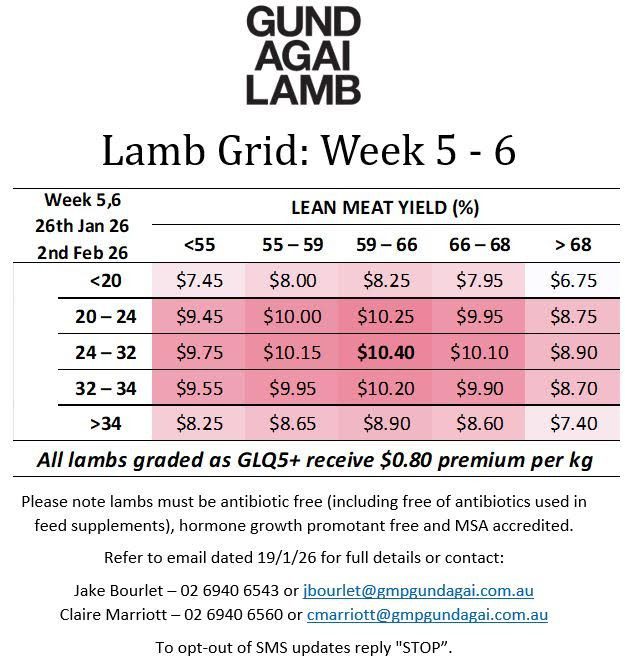
Mr Bull supported the Gundagai Lamb feedback model being replicated through industry.
“I think there are plenty of people who collect information on carcases, but the data never goes to the producers.
“I think the key to this is; that the processing sector has probably got to understand it’s important for them to have a production base,” he said.
“Otherwise, huge tracts of land have already gone to cropping and cattle in some areas, and that could continue, so my thoughts are that better information going up and down the supply chain is one of a number of things that need to be done.”
Mr Bull said the availability of full carcase feedback is limiting growth in all the sheep sectors – Merino, crossbred and shedding sheep.
He said his reference to an industry standard referred to a standard for the uptake of carcase feedback and information flow right though the supply chain.
“The processing and retail sectors are heavily invested in having a production base.
“We need an industry that is sophisticated enough to attract young people,” he said.
“No feedback, or just simply saleyard selling, is not that inspiring.
“We can’t be seen as a rust belt industry, so carcase information flow and use of technology to me, is really important.”
While I am supportive of advocating for greater producer feedback, I suspect the shift away from lamb to beef and cropping is driven more by economics than by a lack of producer feedback. Lamb enterprises cost more to run than beef (on a $/DSE basis), so we need to see lamb kill prices stay at $10.50/kg cwt or thereabouts to make lamb competitive with beef (assuming a steer price of $5/kg lwt). If we get a few years of that I predict that the exodus from lamb will wane.
To improve retail demand for lamb there are two actions needed:
1. Improve eating quality through more tender meat. There must be some simple solutions to why lamb is mostly tough, no matter the cooking method.
2. Provision of ready to cook meals, which have transformed the demand for pork and chicken.
Tom and Chris are exactly right. When I questioned Meat & Livestock Australia at the annual general meeting on the rewarding of producers for the quality of the product they produce, Michael Crowley commented it was very close. Lack of traceability in the sheep industry is driving people to alternative products and production.
Spot on. The processors need to evolve into this space and government support transition funds should be used to help this evolution.