
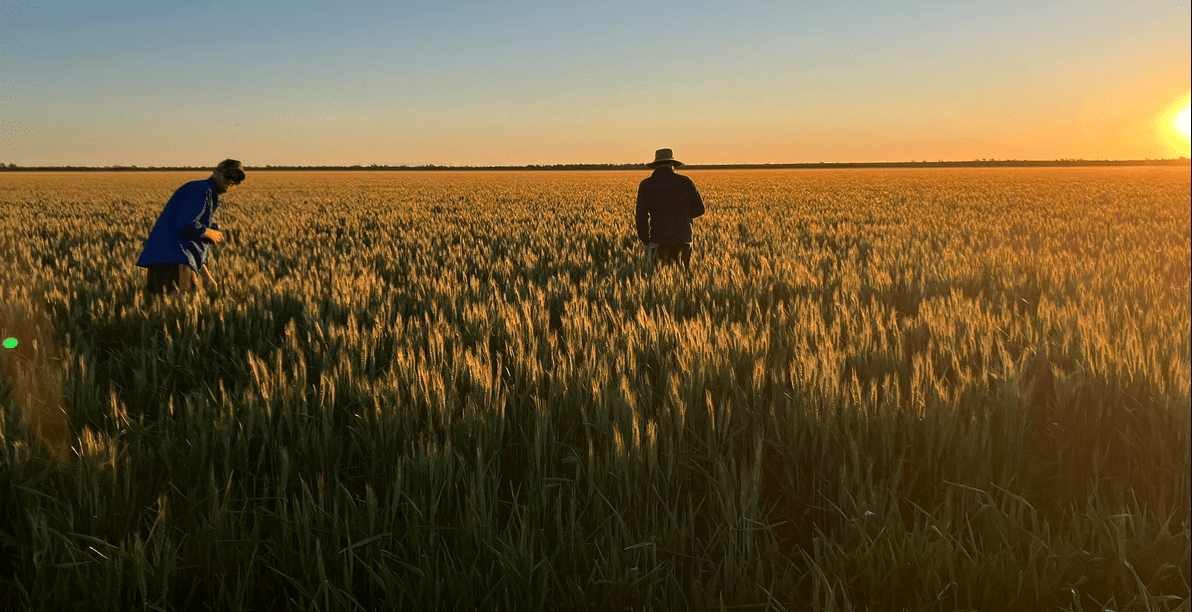
Tomahawk wheat growing in lakebed country on Wyndham Station in south-west NSW. Photo: Angus Whyte
NEW season hay is just around the corner, and not before time.
It will be used to replenish what by all accounts is the lowest ever stock level of hay in south-eastern Australia, a function of a brutally dry 2024 and early 2025, unprecedented demand from floods as well as drought, and high livestock prices.
Much of what is baled is expected to replenish depleted on-farm stocks, and will come in small part from struggling cereal and canola crops, but mostly intended hay area.
Among the first offerings to hit the market will be oaten hay from Wyndham Station at Wentworth in south-west New South Wales.
Lakebed sweetens tough season
Angus Whyte and family run a Merino and crossbred operation at Wyndham Station, and have opportunity cropped around 2000ha this year in their lakebed country.
Floods generally come once every 10-12 years, and the most recent was in 2022-23.
 “It only went dry in April, and it’s a matter of making use of the moisture,” Mr Whyte said.
With a farming partner, they planted wheat for grain and oats for grain and hay in a no-input system that reflects the weed-free status of country post-flood, and the richness of lakebed soil.
Wheat is expected to yield 4-5 tonnes/ha with a ballpark value of $250/t on farm, and hay 6t/ha at roughly $350/t.
Ahead of some showers forecast for coming days, contractors started cutting hay on Wyndham Station today.
“If it’s not 30 degrees here today, it’s close; we should have 300ha cut by the end of week.”
Mr Whyte said an additional 200ha of oats will be cut for hay, and the other 1500ha is oats and wheat for grain, plus a small area of pulses.
While recent rain has brightened the season and put bulk into the oats, he said the season remains patchy.
“There is some green around, but we’re not out of the woods.”
“South Australia and western Victoria is where the hay will go; there are so many hay sheds that are empty.
Wyndham Station’s lambs are now being marked at only around 20 percent, following only “a whisker over 50 percent” of ewes scanning pregnant, to reflect the toughness of the season.
“We’ve got predominantly Merinos, with some joined to white Suffolk rams.
“We’re down to about 2000 breeding ewes; we’d like to be joining 5500.”
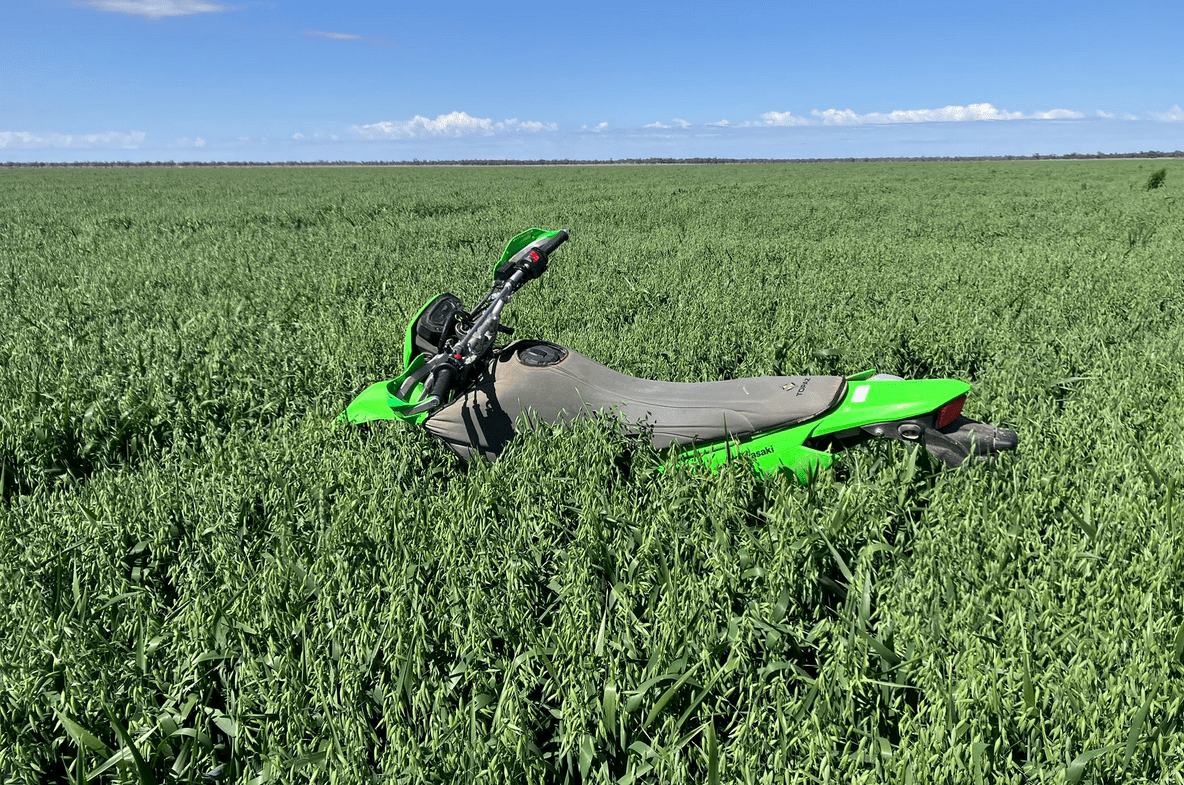
This crop of oats growing in lakebed country on Wyndham Station in south-west NSW is expected to yield around 6t/ha of hay. Photo: Angus Whyte
While plenty of people are value adding hay and grain by putting them through sheep and lambs, the Whytes keep their cropping and grazing at arm’s length.
“We make a clear choice here; we manage our dryland country, and we budget our feed to not chew it out.
“We don’t want to buy ourselves another job feeding stock, so we sell grain and hay in the years we produce it.”
“We’re very lucky that we’ve got money coming in through cropping.”
Ideal value-add
West Wyalong is a stronghold of store sheep production, and agent Paul Quade of Quade Moncrieff Livestock & Property said demand was strong for Merino ewes as the foundation animal for the prime lamb market, and for dual-purpose flocks.
“There are record prices for lambs, and when you compare your inputs to the profits, it’s a good market to be in,” Mr Quade said.
“When you look at returns for inputs into grain, it makes the sheep job look pretty good.”
He said strong sheep and lamb markets have been absorbing on-farm and externally sourced grain in southern NSW, and local store lambs have been heading into the wider Forbes and Wagga Wagga districts for finishing.
“Quite a few of my blokes are buying a bit of grain in, or putting their own into sheep and lambs.”
He said the limited biomass of many of the district’s crops meant that hay production would probably be back on the average.
“There won’t be as much hay cut around here as there normally is; there’s not the bulk in the crops.”
He said mixed farmers, or those buying store lambs, were getting them up to a liveweight of around 50kg to target the top of the market.
Mr Quade said the West Wyalong district’s sheep numbers have held up, although a selldown was seen when stock water ran very low in an arc sweeping west of the town.
“Some guys sold a lot of sheep in that Tullibigeal, Weethalle, Tallimba, Beckom and Mirrool areas where they were struggling for water.”
South of Dubbo, paddock feed is far from plentiful, and Mr Quade said grain finishing is well and truly worth the effort based on current values.
“If they want $350-$400 for suckers and into the $400s for shorn lambs, they need a bigger article; grain helps with that.”
Grain Central: Get our free news straight to your inbox – Click here
HAVE YOUR SAY