
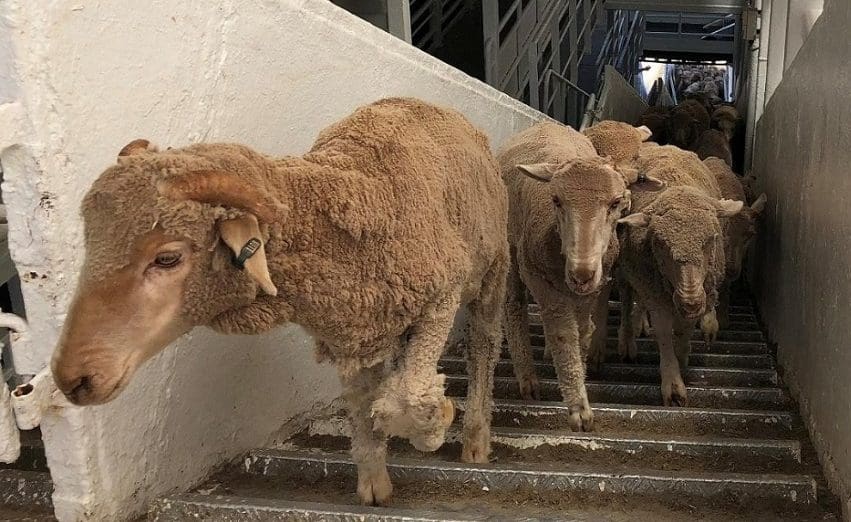
Somalia claims Australia’s phaseout has helped its sheep exports.
REPORTS that Australia’s impending departure from live sheep exports by sea has benefited another global exporter has prompted contrasting reactions from current and former industry leaders.
Somalia’s director of animal health at the Ministry of Livestock Qaasim Abdi Moallim has been quoted as attributing an increase in Somalian sheep exports to drought and conflict in Sudan, and the phaseout of the Australian trade by May 2028.
Media outlets have reported that Somalian Government data shows that livestock export revenues rose from $523 million in 2021 to $974 million in 2024 and that the eastern African republic is on track to exceed $1 billion in livestock exports in 2025.
“First, Sudan, once a major livestock exporter, is facing ongoing conflict.
Second, Australia, another key supplier to the Gulf, has scaled back its exports,” the Somalian official reportedly said.
“This has created an opportunity for Somalia to step in and accelerate its exports.”
Trade phaseout has allowed less regulated supply chains in – ALEC

ALEC chief executive officer Mark Harvey-Sutton.
Australian Livestock Exporters Council chief executive officer Mark Harvey-Sutton said the growth in Somalian sheep exports is the direct result of the Labor Government’s ban on live sheep exports.
“And (it) is proof of what the industry has been saying all along – that the market won’t miraculously change when Australia withdraws, they will simply source sheep from other suppliers.
“The Albanese Government has handed a billion-dollar export market opportunity to our competitors and dismantles decades of work building relationships, infrastructure, and world-leading animal welfare systems,” Mr Harvey-Sutton said.
“This investment of time and effort is what has led to vastly improved animal welfare standards within our trading markets.
“Removing Australia’s highly regulated live sheep export industry from the world stage will have a detrimental impact for animal welfare outcomes globally and allow less-regulated supply chains to flourish – and that’s on the heads of every activist organisation and parliamentary representative who lobbied for and supported the live sheep trade ban,” he said.
Sheep export mistakes risked cattle trade – Balzarini
Former Wellard director and chief executive officer Mauro Balzarini highlighted the Somalian export figures on Sheep Central, but did not believe the Somalia situation is only or predominantly caused by the Australian ban.
“Somalia has always been a significant exporter of sheep and they export a very different type of sheep which serve different sector of the market. The lingering ban had a minor impact.
“Albanese, who I met when he was minister of transport, surely knows the value, but he also knows that the public perception of this trade is negative and I think he has not underestimated the effect,” he said.
“On the other hand, the industry is not helping itself when I see ships that are 40 years old, and therefore intrinsically unsafe, still loading in Australia.
“It definitely did not show any serious commitment to innovating and securing the industry. The last new building ship of significant size is still the last one I built in 2016 (now called Al Kuwait), over 9 nine years ago,” Mr Balzarini said.
“How do they say: ‘put your money where your mouth is’.”
Mr Balzarini is no longer involved in the Australian live sheep trade and lives in New Zealand where he has been working on a project to build LNG-powered livestock export vessels.
“If I were still involved in the trade, I would support the ban because I am afraid that another disaster on a sheep shipment would mean the end of the whole live export industry including cattle, which are far more important than sheep.
“I now live in NZ and as you know there is total ban of livestock export from here caused by a major disaster (that was a disaster waiting to happen),” he said.
“Despite the electoral promise of reinstatement, it is still not happening.
“Like any wound it has heeled and many farmers realized that they can live without and made different arrangements,” Mr Balzarini said.
“Sheep price are firm now in Australia despite the looming ban, because there are other market forces that play a much more important role than live export in driving sheep farming profits.
“In the 90s we were exporting over 7 million sheep and we bought sheep for 20 dollars and farmers were losing money,” he said.
“Having said that, a better approach to safeguard the industry would have been a more stringent regulation, with a 20-year age limit on ships (BHP impose that for transport of iron ore!), a higher standard for livestock service on board, lower loading density and a serious vetting process for all companies involved in the trade.”
Animal welfare should be your first priority, not the amount of sheep exported. Australian sheep and cattle have been treated very badly, whether in the paddocks, saleyards and abattoirs, let alone the live export trade. This to me, who has come from a sheep farming family since 1853, is nothing but a disgrace and it must change not only for our animals, but for our reputation too. New Zealand has seen the way, why not Australia?
The crux of the article is totally spot on. I have lost track of the amount of industries that did not change fast enough or refused to and became irrelevant.