
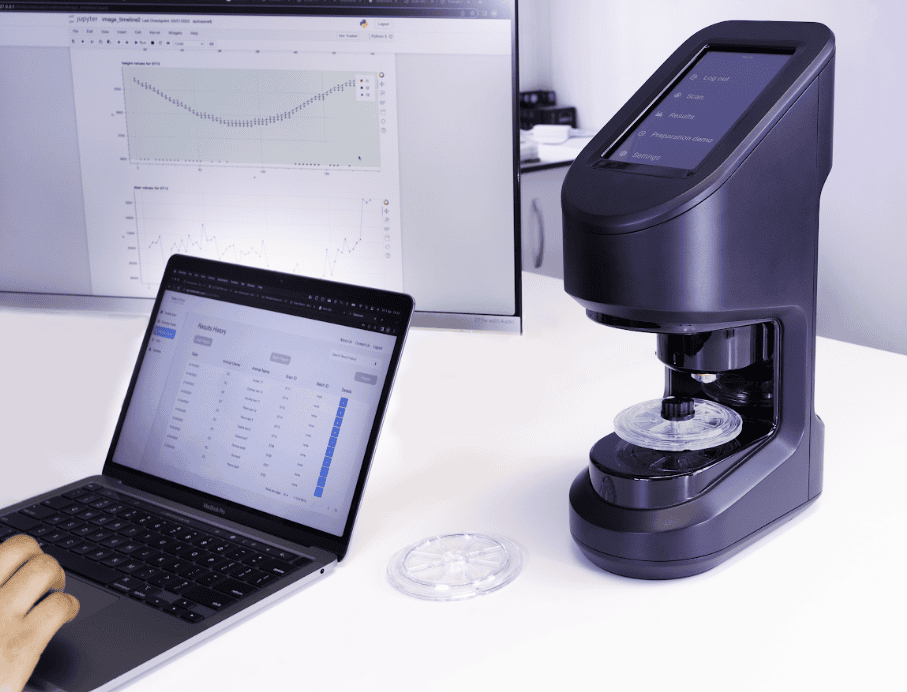
Recent advances in optical technology and artificial intelligence have enabled development of the OvaCyte analyser.
ARTIFICIAL intelligence has entered the field of livestock parasitology with the launch of a new AI-powered parasite diagnostic tool for producers, veterinarians and rural advisers.
Livestock parasitology service provider Dawbuts Pty Ltd has launched the OvaCyte analyser — developed by Telenostic — in Australia.
Dawbuts said the third-generation AI-powered technology uses a 7ml cassette to capture up to 180 images of worm eggs floating in saline solution, which are then identified and counted through an AI engine.
The analyser connects via Wi-Fi or a mobile phone hotspot, making it practical for use in rural locations, the company said. According to the Dawbuts website, an OvaCyte faecal analyser costs A$6600, GST included.
Dawbuts said sample preparation takes just two minutes and requires no centrifuge or specialist reagents other than saturated saline. This means producers can make decisions on drenching and management immediately rather than waiting for several days or weeks on laboratory testing and results via post or courier, the company said.

Dr Matthew Playford
Dawbuts managing director and veterinarian Dr Matthew Playford said the provider has been keeping a close eye on point-of-care options for livestock diagnostics.
“Recent advances in optical technology and artificial intelligence have led to massive progress in this space and Telenostic have done an incredible job in harnessing it into a single unit for sheep, cattle and horses.
“The biggest plus is that it can distinguish the eggs of sheep barber’s pole worms and pathogenic coccidia straight away in a rapid and affordable system, allowing our farmers to make fast and confident drenching decisions,” he said.
OvaCyte can detect as few as three eggs per gram of dung, making it the most sensitive automated system currently available, the company said, making it suitable for monitoring sheep, cattle and horses, as well as conducting drench resistance testing. The analyser also identifies and counts coccidial oocysts, giving warning of coccidiosis before clinical signs appear, while a separate testing cassette enables rapid detection of liver fluke and paramphistome eggs, assisting with the diagnosis of flukicide resistance.
Dawbuts said the instant identification of sheep barber’s pole worm (Haemonchus) during or after the egg count allows producers and advisers to make more informed drenching decisions using tools such as WormBoss, while also providing valuable estimates of pasture larval contamination. The cost per test is comparable to existing automated faecal egg count systems, making the technology accessible without increasing testing costs. Users are supported by the expertise of the Dawbuts reference laboratory.

Telenostics CEO Jamie Fennelly.
Telenostic chief executive officer Jamie Fennelly said rrench resistance is one of the most significant challenges facing livestock producers, and better treatment decisions begin with fast, reliable information.
“OvaCyte was developed to make high-quality parasite diagnostics practical at the point of care, giving veterinarians, advisers and producers the evidence they need to treat more selectively and help preserve the effectiveness of existing drenches.
“OvaCyte is already well established in international markets across Europe and North America, with over half a million scans completed through the platform to date,” he said.
“We are extremely excited to bring the technology to Australia, and we could not ask for a better partner than Dawbuts.”
HAVE YOUR SAY