
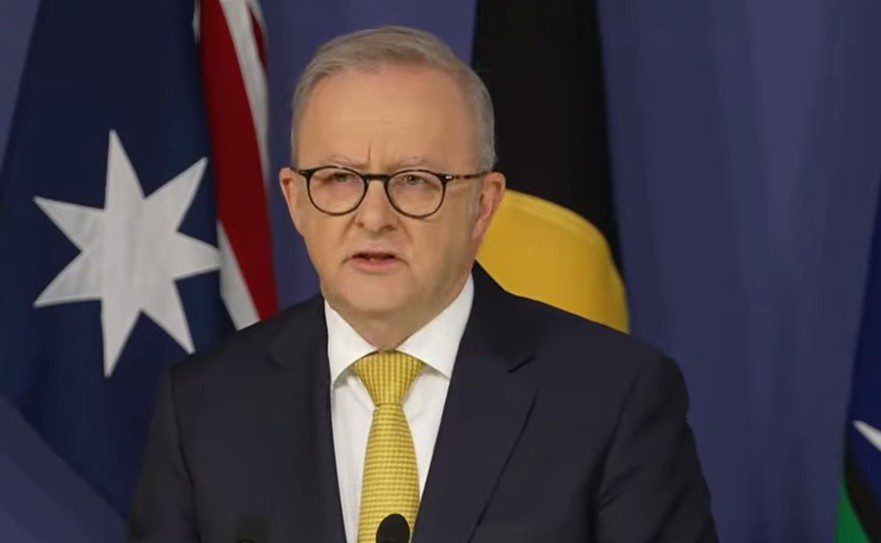
Prime Minister Anthony Albanese unveiled the plan during a press conference held today.
THE FEDERAL Government has announced that next week’s budget will include an Australian Fuel Security and Resilience package aimed at delivering energy sovereignty and protecting Australian’s energy interests.
The package will provide more than $10 billion to secure Australia’s near-term fuel and fertiliser security, establish a permanent Government-owned Australian Fuel Security Reserve of around a billion litres, and lift the Minimum Stockholding Obligation by around 10 days for every type of fuel.
This will support an overall expansion of Australia’s onshore fuel reserves to ensure at least 50 days of fuel supply and storage of diesel and aviation fuel.
The package will include $7.5B for the establishment of a Fuel and Fertiliser Security Facility to increase supply and storage of fuel and fertiliser by providing financial support including loans, equity, guarantees, insurance and price support.
This will be alongside $3.2B to establish a government-owned Australian Fuel Security Reserve of around a billion litres to increase long term diesel and aviation fuel supply and storage in combination with an increase to the Minimum Stockholding Obligation (MSO), to increase Australia’s critical fuel reserves to 50 days.
The Australia Fuel Security Reserve will focus on regional stockouts and supply constraints for essential users in the event of another supply crisis.
The investment will also feature $10 million to support feasibility studies into new or expanded fuel refining capabilities, to be co-funded with state and territory jurisdictions.
Prime Minister Anthony Albanese said the plan was designed to deliver energy sovereignty.
“This is aimed at making sure that Australians can have more confidence in protecting our energy sovereignty, not just during this crisis, but going forward as well, protecting our nation’s energy interests,” Mr Albanese said during today’s press conference.
He said the government will consult on implementation of the fuel reserve to enable the ability to underwrite or purchase fuel, support storage, and trade stocks as needed to ensure our fuel security during severe or prolonged fuel supply disruption.
“Now we’ll consult on the implementation of the fuel reserve to underwrite or purchase fuel, support storage and trade stocks as needed to ensure our fuel security during severe or prolonged fuel supply disruption.
“As a matter of courtesy, I went through these measures at the National Cabinet meeting that met this morning.”
Minister for Energy and Climate Change Chris Bowen said Australia was “in a minority of countries in the International Energy Agency who don’t have a government-owned fuel reserve”.
“We will now have a government-owned fuel reserve of around a billion litres to add to those minimum stocks that the private sector must hold, particularly focused on diesel and jet fuel, where we do need to ensure greater domestic capacity and supply in the worst of circumstances,” Mr Bowen said.
“This is a big change in our approach as a country and a good one, building on the increase in the Minimum Stock Obligations that we’re requiring the private sector to hold 10 days and adding more so that we would have 50 days’ worth of diesel and 50 days’ worth of changes jet fuel, which is an appropriate level.”
Mr Bowen said he had commenced talking to industry about this change.
“What we will do is then work with the sector to assess how we can best add to their own holdings, so they are required to hold fuel and are required to hold more fuel under the fuels that we are bringing in place.
“We’ll work with them to assess where our reserves can best be held.
“They will have facilities where we can hold it as well they will also have ideas about how we can best add to theirs, that process begins today.
“I have already spoken to the fuel company chief executives about that over the course of today and that work will continue.”
NFF welcomes fuel package
National Farmers Federation president Hamish McIntyre said the $10 billion Australian Fuel Security and Resilience package announcement is a welcome step toward building the sovereign capability we need to protect our food system.
“The package will establish a fuel and fertiliser security facility, and create a government-owned fuel security reserve. The package will also increase the Minimum Stockholding Obligation by 10 days.
“These are practical decisions that will increase our liquid fuel and fertiliser security,” he said.
“The Prime Minister has been clear that the fuel reserve will focus on regional stockouts and supply constraints for essential users. This is critical and we want to ensure farmers and fishers see the benefit of this on the ground.
“We’re also pleased that the announcement extends to government-backed loans, equity, guarantees, insurance and price support for the supply and storage of fertiliser,” Mr McIntyre said.
“Reliable and affordable fuel and fertiliser underpins every stage of food production, and recent events have shown just how exposed Australia is to global shocks.
“We’ll continue working with the government to ensure these measures deliver for producers to keep food and fibre growing and moving.”
GrainGrowers response
Industry representative, GrainGrowers, has welcomed the news with CEO Shona Gawel calling the announcement a “positive step forward”.
“Establishing a domestic government-owned Australian Fuel Security Reserve demonstrates significant progress, particularly the focus on addressing regional stockouts and ensuring supply for essential users during times of crisis,” Ms Gawel said.
“Today’s announcement also bolsters onshore storage of fertiliser stocks. Fertiliser shocks have created significant cost and supply challenges for growers since the conflict began.
“The conflict in the Middle East has demonstrated vulnerabilities in some of Australia’s key agricultural supply chains, reinforcing the urgent need to bolster domestic capability, including new or expanded fuel refining capacity.
“Strengthening domestic refining, storage and distribution infrastructure is essential to ensure continuity of supply for critical sectors such as agriculture during periods of instability.
“It is vital that critical input access for grain production and supply chains is explicitly prioritised, recognising agriculture’s role in both domestic food security and export markets.”
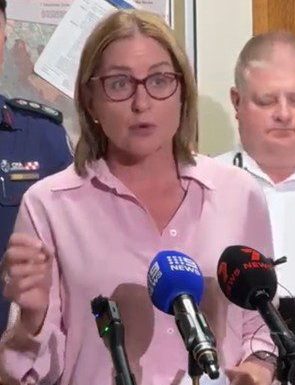
Victorian Premier Jacinta Allen
Vic farmer fuel reserve
The move comes on the same day as the Victorian Government’s announced it had secured a 10-million-litre diesel reserve for agriculture.
This reserve would only be released if Level 4 of the National Fuel Security Plan is activated.
The measure complements the Commonwealth’s existing Minimum Stockholding Obligation for fuel companies.
Victorian Premier Jacinta Allan said the reserve will help farmers make confident planting and farm management decisions for the winter growing season.
“Our regional communities rely on a strong harvest. That starts with knowing fuel will be there when it’s needed,” Ms Allan said.
“Backing farmers means backing local jobs and businesses and keeping grocery prices down for everyone.”
VFF support
Victorian Farmers’ Federation has welcomed the move, calling it a sensible step to strengthen confidence across the sector.
VFF acting president Peter Star said it was a step in the right direction after sustained advocacy from farmers and the industry.
“Securing this vital diesel reserve is a practical and welcome move that gives farmers greater confidence after one of the most volatile periods in recent memory,” Mr Star said.
“Farmers have been at the coal face and bearing the brunt of diesel scarcity.
“Without a reliable supply of diesel, our industry grinds to a halt and so does our ability to produce food and fibre.
“This move will help ensure farmers can keep farming and providing food for our supermarket shelves.”
Mr Star added while the reserve provides an important safeguard and will help farmers plan with greater certainty, it must be part of a broader, coordinated approach to supporting agriculture.
“Fuel security is essential, but it’s only one piece of the puzzle.
“Farmers are still dealing with high input costs, tight margins and ongoing seasonal challenges.”
HAVE YOUR SAY