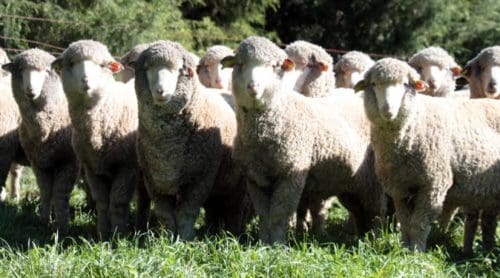
Merino cross lambs with electronic ear tags. Image – CSU.
CALLS to extend the national mandatory electronic identification rollout for sheep and goats by two years have been rejected by the New South Wales Government and Meat & Livestock Australia.
NSW Farmers and WoolProducers Australia have called on the NSW Government to rethink its final mandatory sheep and goat EID rollout deadline of 1 January 2027, warning farmers are being forced to bear unnecessary costs and compliance burdens before the national traceability system is ready.
Both organisations have said they support strong biosecurity and effective livestock traceability, but are calling for full mandatory implementation to be deferred until a National Livestock Identification System update is complete, and for existing transitional provisions to be retained to prevent double tagging.
Queensland’s AgForce also supports delaying the date at which all sheep and goats must carry EID tags until 1 January 2029, as it seeks concessions for older sheep already tagged with visual tags destined for direct abattoir delivery.
However, the NSW’s Department of Primary Industries and Regional Development has told Sheep Central it was still working toward the 1 January 2027 date. And despite MLA’s general manager of integrity systems, Jo Quigley, admitting in July this year that the NLIS database update project had run into unexpected complexities, she said this week the existing database will remain operational until NLIS 2.0 is introduced, “with no interruption to services anticipated.”
In July, Ms Quigley told The New England Times that NLIS 2.0 involved extensive testing and review, “a process that has identified a number of complexities, that needed to be worked through before delivery.”
She said the complexities included transaction volume, regulatory demands and complicated workflows, and confirmed ISC had changed vendors “to ensure we remain on track to deliver value for industry, meet all our requirements and objectives, and implement NLIS 2.0 efficiently.”
This week Ms Quigley told Sheep Central the NLIS database continues to operate reliably and is comfortably managing more than 70 million sheep and goat devices, with ongoing investment in infrastructure, security and resilience.
“The uplifted NLIS 2.0 database remains under development, with a revised target go-live date of late-2027, subject to the successful completion of testing.
“The existing database will remain operational until NLIS 2.0 is introduced, with no interruption to services anticipated,” she said.
“The revised NLIS 2.0 delivery timeline does not impact the existing database’s capacity to support mandatory electronic identification (EID) for sheep and goats from 1 January 2027.
“Decisions regarding the implementation timetable for mandatory sheep and goat EWID rest with state and territory governments,” Ms Quigley said.
“Integrity Systems continues to work closely with governments and industry to support implementation and deliver a reliable, modernised national livestock traceability system.”
NSW DPIRD committed to 2027 rollout
A NSW Department of Primary Industries and Regional Development spokesperson said the NSW Government has committed to the national full implementation date of 1 January 2027 and is confident that the industry is on track based on the strong uptake numbers across the state.
“Saleyard tag figures strongly indicate that NSW producers are aware of and understand their requirements for EID tagging as it is implemented nationwide to heighten the biosecurity protection of the industry.
“The roll out of the EID program is part of the Minns Government’s more than $1 billion biosecurity investment to protect and secure the agricultural sector,” the spokesperson said.
“A delay would risk undermining industry and market confidence, disrupt preparedness efforts and hinder the traceability and biosecurity benefits that the sheep and goat supply chain has been working towards for several years.
“All other states remain committed to the 1 January 2027 implementation date, with Victoria, Western Australia and the Northern Territory having already fully implemented EID for all sheep and goats,” the spokesperson said.
“A delay by NSW would put final implementation dates behind all other states, prohibiting national harmonisation and risk our traceability and biosecurity systems for our sheep and goat industries
“Producers were made aware of the 1 January 2027 timeline in 2022 when it was determined nationally that all states would implement individual EID for sheep and goats.
“Phased implementation dates have meant that various sectors of the supply chain have had the opportunity to ensure equipment and processes have been in place prior to the full implementation date,” the DPIRD spokesperson said.
Sheep EID rollout – make it right before making it mandatory
NSW Farmers wool committee chair, Craig Mitchell, said full mandatory implementation must be backed by reliable systems, adequate infrastructure and fair funding arrangements.
He said producers were particularly concerned about the requirement to electronically tag older sheep and goats already fitted with compliant visual National Livestock Identification System (NLIS) tags.
“Farmers who have done the right thing and complied with existing identification requirements should not be forced to tag the same animals twice simply because the government has changed the rules,” Mr Mitchell said.
“These animals are already identified and traceable, yet producers are being asked to bear the cost of another tag, additional labour and unnecessary livestock handling.
“There’s also an animal welfare impact from having to bring stock back through the yards and handle them again, all without a clearly demonstrated improvement in traceability,” he said.
WoolProducers Australia chief executive officer, Jo Hall, said the wool industry had consistently maintained that support for mandatory EID was conditional on appropriate national arrangements being in place.
“Effective livestock traceability is essential to protecting Australia’s biosecurity, our livestock industries and our international market access,” she said.
“However, mandating electronic identification before the national database and supporting systems are fully operational risks imposing significant costs on producers without delivering the traceability improvements the industry has been promised.
“Producers cannot be expected to keep absorbing additional costs and compliance obligations while fundamental questions about system readiness remain unresolved.”
Both organisations have also raised concerns about delays to the NLIS database uplift project, inconsistent scanning and reporting practices, and the cumulative costs of electronic tags, equipment, labour and ongoing compliance.
Mr Mitchell said the NSW Government needed to listen to producers and address these concerns before proceeding with full mandatory implementation.
“This isn’t about resisting better traceability. It’s about getting the implementation right and ensuring farmers aren’t left paying the price for a system that isn’t ready,” he said.
Ms Hall said retaining transitional identification arrangements would be an important step towards ensuring producers were treated fairly.
“Good biosecurity policy must be built on sound systems, practical implementation and genuine consultation with the people expected to make it work,” Ms Hall said.
“The NSW Government must address these outstanding concerns and demonstrate the system is ready before imposing further costs and obligations on producers.”
HAVE YOUR SAY