
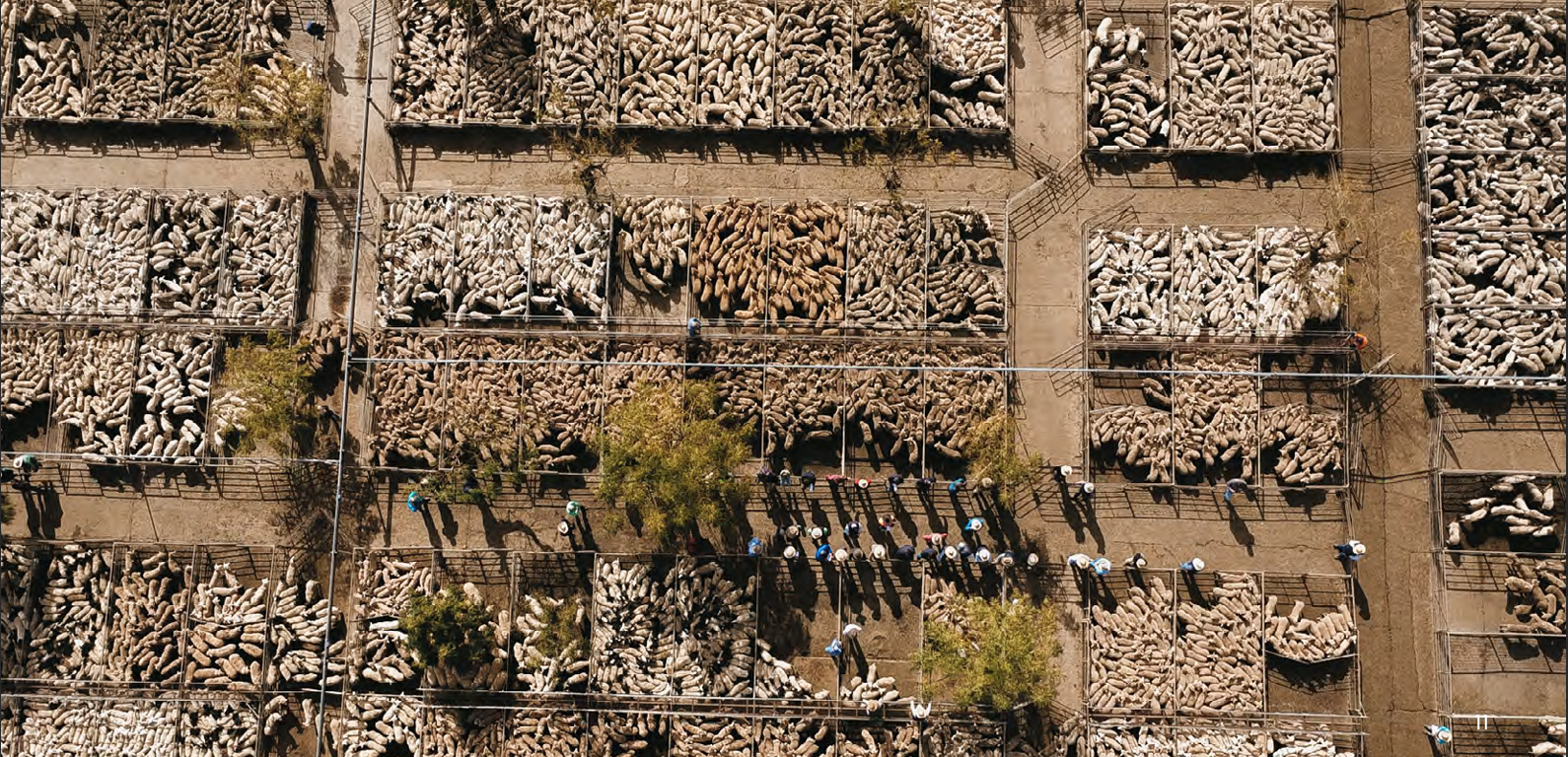
SALEYARDS should be recognised and funded as nationally significant agricultural infrastructure, given the critical role they play in food security, freight, biosecurity, market access and emergency response.
That is according to Charles Boog, the chief executive officer of Signal 7 who has been advising the Dubbo Regional Council on the future of its saleyards after the facility failed to sell in 2024.
“Australia’s national infrastructure frameworks recognise major food-distribution networks like supermarkets, ports and freight terminals, but overlook the saleyards connecting producers to those systems,” Mr Boog said.
He presented at the National Saleyards conference last month and encouraged governments, saleyard operators and livestock agents to stop viewing saleyards as isolated infrastructure assets and instead to see the facilities across the country as a national network.
“When I started with Dubbo, we changed the thinking about what sort of an asset the saleyards were,” he said.
“Between a third and half of all livestock trucks in New South Wales pass through Dubbo. That’s a strategic logistics hub.
“In times of drought, Dubbo’s numbers will swell past 230,000 head of cattle and 1.3 million head of sheep a year to well over 400,000 head of cattle and up to 2.3 million sheep,” Mr Boog said.
“The saleyards are critically important to farmers and their regional communities in these times as it allows them to move their stock no matter what’s going on.
“That role becomes even more important during system-wide shocks. COVID-19, international trade volatility and fuel-supply disruptions have shown how quickly pressure on national supply chains becomes personal and financial pressure on producers and regional communities.”
Coordinated investment needed
One of the major threats to saleyards is the investment needed to maintain and improve facilities, which are mostly owned by local government.
“In 1970 there were about 600 saleyards in Australia. Today there are fewer than 100. And if nothing changes, how many saleyards will there be in 10 years?” Mr Boog asked.
“In the last 15 years governments have spent $300 million on saleyards, but some still closed or were sold, and some are still struggling.
“Our assessment found that approximately 52 per cent of assessed infrastructure needs attention and around 13pc require urgent attention—including major facilities such as Dubbo.
“But if Government recognised saleyards as national infrastructure, you could coordinate investment responsibility between the Commonwealth, states, councils and industry.
“It would mean treating the major saleyards as connected parts of Australia’s food, freight and biosecurity system, and not simply isolated council facilities.”
Role of saleyards needs to be reshaped
Infrastructure Australia’s legislation recognises five infrastructure areas: transport, energy, communications, water and social infrastructure.
But Mr Boog said he would like to see agricultural infrastructure added as a category.
He explained the role of saleyards needed to move from largely local community facilities to a more specialised national system.
He explained that four different types for saleyards are emerging: major anchors, specialist yards, regional team players, and transport/welfare/biosecurity hubs.
“This is not about giving a ranking. A saleyard does not need to be the biggest to perform an essential function,” Mr Boog said.
“Around the 85 facilities covered by our modelling, we found there are five anchors, 19 specialists, 53 regional team players and eight transit, welfare and biosecurity hubs.
“By recognising the role of each saleyard and mapping the network, this allows the yards to then be incorporated into food-security, freight, biosecurity and emergency planning.”
National recognition of saleyards would benefit the whole industry
National recognition of saleyards would benefit the whole industry according to Mr Boog.
“The benefits are a more resilient, productive sector with better market access and prices for farmers and better use of public money,” he said.
He explained that local government already owns nine out of ten saleyards; that’s most of the physical network.
“That means government is best positioned to target investment that strengthens the whole network,” Mr Boog said.
“But industry needs to define what that network should look like, or closures and funding decisions will define it for them.
“My message to industry is – every saleyard must understand and adapt to the role it performs. We need to stop presenting each facility as an isolated local funding problem. That will require sharing data, coordinating with neighbouring saleyards and being prepared to rethink governance, operating and investment models.”
Mr Boog shared these facts with the National Saleyards Conference:
- Saleyards Australia represents approximately 83 members.
- Its members facilitate an estimated $8.2 billion in livestock transactions annually.
- Saleyards are located in 39 federal electorates, which contain approximately 7.2 million enrolled voters, while their economic reach extends well beyond their host council boundaries.
- Member yards handle more than 20 million head of livestock each year (4.2 million cattle, 16 million sheep).
- Major saleyards can serve thousands of producers, with Dubbo alone serving more than 10,000.
HAVE YOUR SAY