
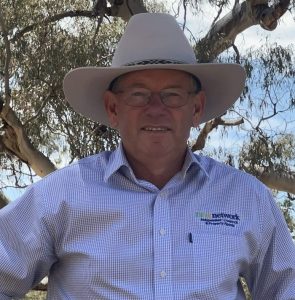
Chris Howie.
STORE lamb and feeder cattle finishers should lock in forward sale prices with contracts as a seasonal reset in pricing looms with improved spring and summer supplies, according to Sheep Central’s livestock markets columnist, Chris Howie.
Changing gears
I have noticed the vibe around pricing across all types starting to change. Processors have modified shifts and required numbers to match supply instead of continually lifting prices. Feedlots have used delivery points and freight to manage pricing.
At this time of the year supply naturally starts to increase. As a rule of thumb, southern mutton numbers start to lift from now, significant sucker lambs about third week of September, fat heifers mid-October and so on. In the north, the run of exit cattle is now in full swing and we normally see the softening cattle prices in the north take about six weeks to come south.
Many analysts are reporting the export numbers and demand are still strong; however, price resistance, tariff and redirection of product is an issue. From my point of view, this means only one thing; as soon as reasonable numbers appear the market will reset very quickly.
Again, this is a normal trend and the overall pricing and demand will follow the improved trajectory over time. However, the improved supply in spring and summer absolutely provides a tool to soften price. It will start with mutton and lamb and then move to cattle, feedlot and processor grids. I have just seen the first lamb grids start to back off and feeder cattle rates are barely treading water. This does not mean either market is in trouble, just that the supply/demand needle will swing and processors/feeders will reset their buying base.
For the breeder/trader I think this adjustment will outstrip weight gain benefit for a period. It may pay to do the sums on selling a bit sooner and a bit lighter to end up a better bank balance.
Another bit to focus on is store lambs and feeder cattle prices at this time do not correlate to what the end price will be. It is very easy to suggest when buying that “we will average them over the lot” but why are you giving back your early wins because the numbers don’t stack up now?
With this in mind, if you have forward pricing in place without a contract signed, I suggest get a contract signed asap!! – otherwise you are fully exposed. The coming reset as a percentage of value will be reasonably normal but as a dollar value because of high prices will be significant.
Sheep and lamb
The southern agricultural shearings are well underway, although wet sheep maybe an issue for quite a few. The season has been very good, lambing onto green feed and some of the snaps I’m seeing on AuctionsPlus of early draft suckers/stores are outstanding. September always lines up for early young and breeder ewe sales. Many will wait until these sales as repeat buyers to purchase their requirements. However, if you are not that fussy, I would be jumping into buying your 4.5-5.5 year-olds now. Run them on a tree break with a bale of hay if needed. I think you will be pleased with the difference on the buy price between August and October.
We all want to remember the hooks prices from a month ago, but that time is past. As mentioned, if you have a forward price contract your turnoff is set. Although I am starting to see some fishing rates for crossbred lambs with a 10 in front of them and Merinos with a 9. Mutton will land wherever it will as many of the pastoral areas will hold ewes to restock and rate will be determined by processor needs week by week.
In WA, prices for sheep and cattle are comparative to the east with processor demand being managed by shift not numbers. In turn, this makes a flood of numbers east less likely.
Wool and store sheep
The current wool market makes it absolutely necessary to do the sums before selling any sheep in the wool. Skin prices have rebounded and a six-week pelt has been providing a good return allowing the additional gained of the wool clip value. All wool brokers will give you a prem value and anything 50mm and over is very worth a call. For those purchasing trading sheep, you should have a weekly wool value card in your pocket for prem, lambs and fleece. It is surprising how much difference it adds to your trade margins.
Cattle
With northern New South Wales returning to dry, prices continue to remain very solid under the circumstances. Most producers are keen to offload cattle as soon as they can rather than feed them. Since Christmas many northern NSW producers made the wise decision to sell down quickly rather than feed while exit prices remained strong, which was a major shift from previous dry times.
Strong store numbers continue at major centres such as Roma, Tamworth, Dubbo. The overall weight of offerings seems to be winding back now with more splitter calves appearing from the outer areas as capturing cow price becomes the priority
Feed and demand remain concentrated in central NSW, with the south looking very good and stock performing well. Feeders in the 350kg+ range continue are still in demand but prices are softening. Last week, we saw a correction of 30–40 cents/kg lwt at several sale centres. This saw black feeder steers back to mid $5. British cross feeders with quality remained closely aligned however secondary types were probably 15-30 cents behind. Quality heifer feeders held their ground with some well over $5. It is always difficult to assess these as often a breeding enterprise is the other bidder. It is apparent on many of the British bred crosses that weight for age they seem to be heavier. Someone smarter than me can run that comparison – calving date – breed – sale date – weight – $ in bank account.
Accredited grain-fed cattle for November look to be trading in the low to mid-$10/kg range, with 100-day cattle having a bit wider spread from the high $8 to mid $9. Heavy black feeders up to 600kg range are currently solid mid-$5.
I took the opportunity to call into the Mareeba sale yards in late July. I have spoken to many agents in far north Queensland over time but had never been to this area. I was amazed at the variance in cattle yarded and also how quickly the country changed. As we travelled through Mt Molloy, I saw everything from rangy stores to absolute cracking bullocks as finished as you would see at Leongatha.
I am certain some of the scrub bulls in the Mareeba yards could be taught to lead if you were fast enough to stay in front of them. The size of the yellow bellied swamp dogs in the river north of Daintree shows why mustering from a helicopter maybe safer.
Brief season update
In northern NSW, most areas have received a little rain, but unfortunately there has been no real volume to speak of. Much of the New England and Southern Downs is now looking pretty ordinary. Markets have seasonally adjusted a little earlier, with a fair number of northern cattle continuing to shift south.
In Western Australia, from Kondinin south seems to be staying unseasonally dry with very little paddock feed and a fine line between OK and average a bit further north into the wheat belt. Most other areas are faring OK. Sheep and cattle prices are comparative to the east with processor demand being managed by shift not numbers.
In South Australia, last week was just an old-fashioned winter rain. The Lower South East is traditionally wet and will wait till October to really fire. Across all pastoral and agricultural areas, rainfalll of 40 to 200mm had many creeks running. Sandy Martin from Baratta and Witchitie station let me know the Flinders ranges is having an exceptional season. There was more rain last week with many areas cut off by flood creeks for a few days. On the eastern flood out (Yunta side), the big lagoons have filled and some are up to 30 feet deep. With Lake Ayre continuing to fill, the old adage that water brings rain may strike true. That much water in one spot must change something.
In Victoria and the Riverina, the big rain followed through nearly all of these areas and there was a big dump in the Murray Valleys. North Gippsland had been missing out, but I’ve not heard how they went.
In southern NSW, speaking to Randal Grayson Forbes Livestock Agents a few weeks back, it got very wet at end of seeding with some paddocks too wet. Season is well set to roll into spring.
Agency and wool broker mergers are as Australian as blowflies and beer at a BBQ. The phrase “succession planning” has become so important for the agricultural industry over the past 5 years. Sometimes protecting the business name or family farm is detrimental to a good outcome. Many are now actively managing the next steps in advance which is so important.
During my agency time winning a wool clip was always the cream on the cake. Wool growers are loyal and do not make a decision to move unless you know your stuff.
The one company I never got a wool clip from was Les and Michael Sugars, AR Rhodes & Co in the mid-north of South Australia; good blokes who looked after their clients like family and always prepared to have a beer at days end or a stud sale. This business has joined that historical list of mergers. They have been running in SA since 1933, and have recently joined with long-term independent wool brokers Fox and Lillie as a business move allowing both companies to continue servicing the wool industry. A great outcome.
BeefEx
On the cattle calendar this is a major event for feedlotters, service providers and breeders coming together. This year it is on the Gold Coast, 22-24 September and if you are aligned to the feedlot industry it is well worth a look.
Old company reflection
I read a couple of articles about Elders recently and thought it important to recognise the group that positioned this grand old company to be where it is today. Headlines are easy, but often, in all business, those that did the real work are forgotten; one person doesn’t make a football team.
Between 2008 and 2014 the financial position of Elders was far from ideal. For some it was easier to depart and start with another company or use this period of uncertainty as an opportunity to target Elders business.
The sentiment I want to put forward is that during this period a group of employees, from remote branches all the way to head office, led by the chief executive officer of the time, Malcolm Jackman, dug in to keep Elders alive. We lived and breathed the fight to save the company. The most humbling piece was the loyalty of the clients, with many reciting how they had been supported by Elders in the 50s, 60s and 70s when times were tough.
The importance of Malcolm’s influence during this time gave all of us in the trenches the faith that there was still hope and we were being listened too. It is one of the few times I saw all products working towards a common cause with management, clients and providers.
One war story as an example; on a Thursday in October I called the late Peter Cox who was drafting lambs at Lake Cargelligo and Steve Reynolds who was on his way home from a dairy heifer delivery in China. Without prior notice, by Monday afternoon the next week both were in Moscow, Russia representing their company.
The rest is history and many of us are very proud of what we did to see the Elders brand continue even when some forget.
Just an observation
When did it become a good idea for a sitting Prime Minister to be interviewed by a risqué and very funny comedian like Nicky Osborne? Bedroom banter and melons probably don’t help us with international trade. I remember past Prime Ministers trying to look natural in the front bar drinking a schooner. It didn’t work. Inner city, professional politician chardonnay drinkers don’t fit naturally with those that do the heavy lifting. There was only one Bob Hawke.
New agency structure
RMA Network members following their annual conference in Brisbane have adopted a new agency support structure that is directly aligned to Agency member networking, client support and wider industry engagement. Long-time agent Andrew Hosken based in NSW and myself have been engaged in a part-time roll to provide networking, operational insights and a point of contact for members, service providers and the wider industry. Both of us are looking forward to giving back to the industry that has looked after us for so long.
Opportunities
Do the sums on wool before selling sheep in the wool
Buy your replacement ewes now
Immature new season lambs in a feedlot are a high health risk
Is the weight gain covering the price reset?
Be careful on your trading buy price at this time of year
Fill in a private sale contract.
Stay positive the job is still very good even if prices ease.
Little cattle grow into big cattle.
HAVE YOUR SAY