
THIS week’s property review includes a wrap up of recently completed sales of properties in South Australia, Queensland and the Australian Capital Territory.
ACT’s Uriarra Station makes $20m+
Locals expand with SA’s Gilles Downs Station
Pye family pays $20m for Qld’s Dongon Plains and Combo
ACT’s Uriarra Station makes $20m+
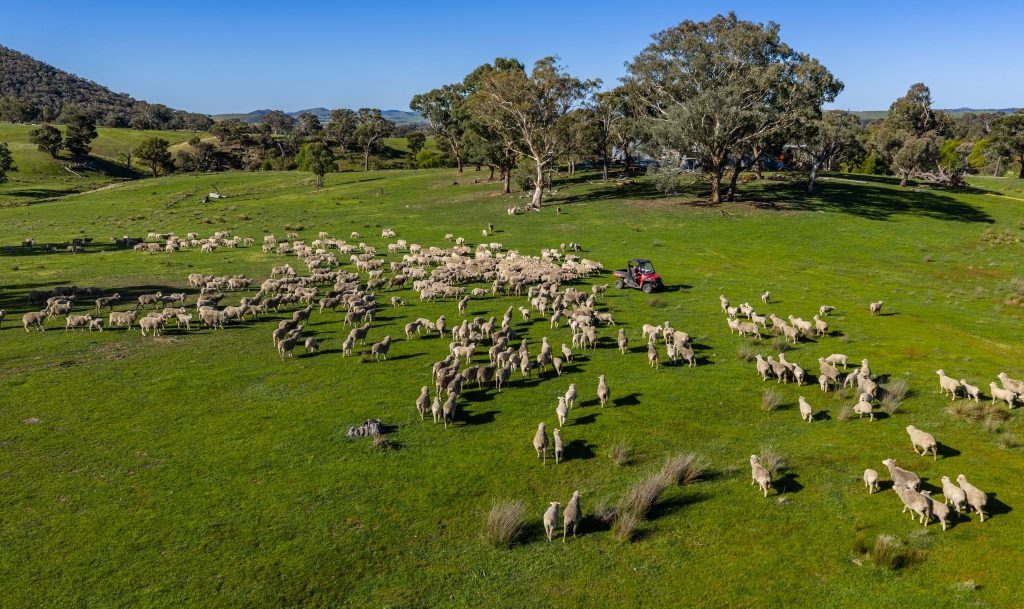
The historic Uriarra Station has changed hands for more than $20 million, setting what is understood to be the highest price paid for a single rural property in the ACT outside development and high-rise sites.
One of the Australian Capital Territory’s largest and oldest operating sheep stations, Uriarra Station, has a long history and has hosted foreign dignitaries, including former US president Richard Nixon.
The property was purchased by Brisbane-based Quinbrook Infrastructure Group, a specialist global investment manager focused on lower-carbon energy infrastructure, renewable energy and the global energy transition.
Ray White Rural agent George Southwell handled the sale, although he was unable to confirm the final price.
He said the buyer planned to keep the property operating as a grazing enterprise, while exploring opportunities that combine agriculture with energy infrastructure.
Tony and Helen Griffin listed the 1194ha holding in April last year after 30 years of ownership. After it failed to sell, Ray White Rural was appointed to run an off-market campaign.
Uriarra Station is located on the western edge of the Murrumbidgee River corridor near Coombs, 20km west of Canberra.
During their tenure, the Griffins ran a sheep and cattle enterprise carrying 10,000DSE across gently undulating country with views to Canberra and the Brindabella Range.
Dr Griffin said the buyer is the right fit for the property and will help preserve its history and agricultural significance.
“The agricultural sector of the ACT is an underestimated section of the broader economy, and this sale should prove otherwise.”
“It shows institutional capital is now actively looking at rural land close to Canberra for combined agricultural and energy infrastructure use,” Dr Griffin said.
The property is watered by numerous springs, creeks and dams, supported by a 4.7ha lake and average annual rainfall of 724mm.
Improvements include a renovated 1860s stone homestead, a four-bedroom manager’s residence, a two-bedroom cottage, a four-stand shearing shed and steel sheep and cattle yards.
Locals expand with SA’s Gilles Downs Station
Ian and Sandy Morris from Thurlga and Yardea Stations in South Australia’s Gawler Ranges are expanding their pastoral footprint with the nearby Gilles Down Station.
The 47,400ha holding is situated on the north-eastern Eyre Peninsula, 23km south-east of Iron Knob, 77km north-west of Whyalla and 90km south-west of Port Augusta.
The highly regarded sheep grazing enterprise changed hands on a walk-in walk-out basis, including 3500 wethers, plant and machinery.
The late Tony Freebairn and his wife, Liz, purchased Gilles Downs in 2009 and operated it as two holdings on either side of the Eyre Highway.
They used the northern portion for sheep grazing between eight-month shearing cycles, with watering points helping to manage grazing distribution.
The southern portion was used to move sheep from the northern country ahead of shearing and to manage young sheep brought to Gilles Downs before they joined the main flock at shearing time.
Ray White Rural agent Sam Krieg said the campaign generated strong enquiry from genuine buyers across South Australia, Victoria and New South Wales.
“Most of the inspections were undertaken by established family farming businesses and existing operators looking to expand their holdings, although we also saw interest from new entrants.”
Principal Daniel Schell said the successful sale reflected strong confidence across South Australia’s pastoral property market.
“Well-capitalised family farming businesses are prepared to act decisively when quality pastoral properties become available, particularly where there is scale, well planned infrastructure and production potential.”
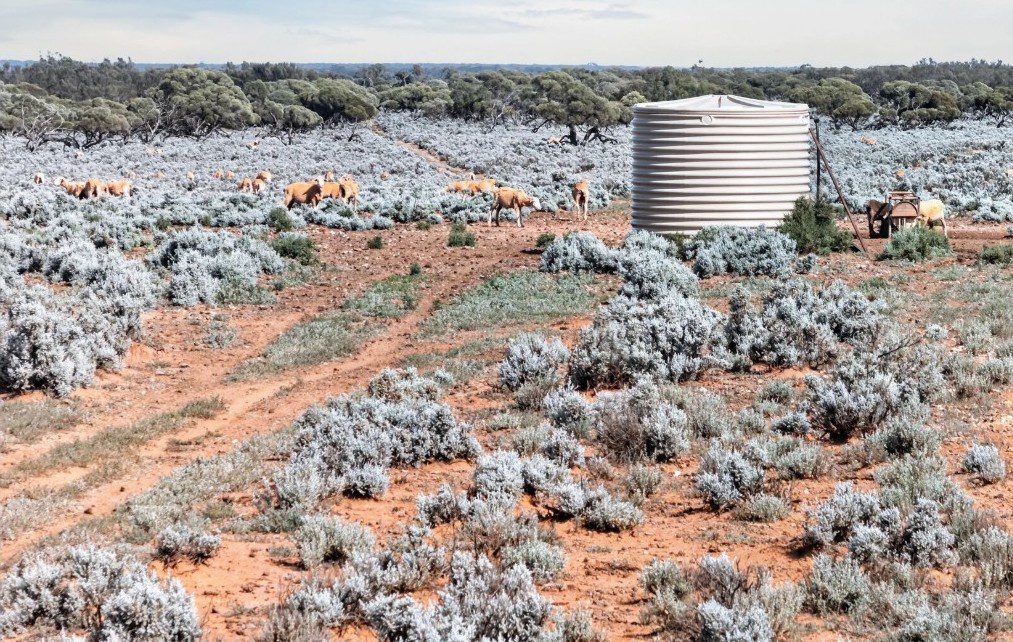
The station was offered with a pastoral board rating of 6000 sheep equivalents. It has historically carried more than 5000 wethers across mostly flat to gently undulating grazing country featuring bluebush and saltbush, along with native grasses and clovers. An added income stream is generated through the annual harvesting of between 1000 and 2000 goats.
Gilles Downs Station also falls within the Whyalla West Release Area, creating potential for future large-scale renewable energy developments, including wind farms.
Water is supplied via SA mains water and 20 dams in a region receiving an average annual rainfall of 240mm.
Infrastructure includes a historic three-bedroom home, three-bedroom workers’ quarters, a four-stand shearing shed, steel sheep yards, eight additional livestock yards, goat yards, shearers' quarters and numerous sheds.
Pye family pays $20m for Qld’s Dongon Plains & Combo
Prominent north-western New South Wales father and son producers Charlie and Harry Pye have paid more than $20 million for Dongon Plains and Combo, expanding their rural holdings into south-west Queensland.
The Pye family is based at the 28,500ha Gingie Station, 30km west of Walgett, that produces more 13,000ha of wheat, chickpeas and grazing crops to finish Wagyu cattle and Dorper lambs.
In April last year, the pair paid $6m for the 1015ha Kerriki and Number One Aggregation in the Upper Manning Valley, on NSW’s mid north coast, for Wagyu breeding.
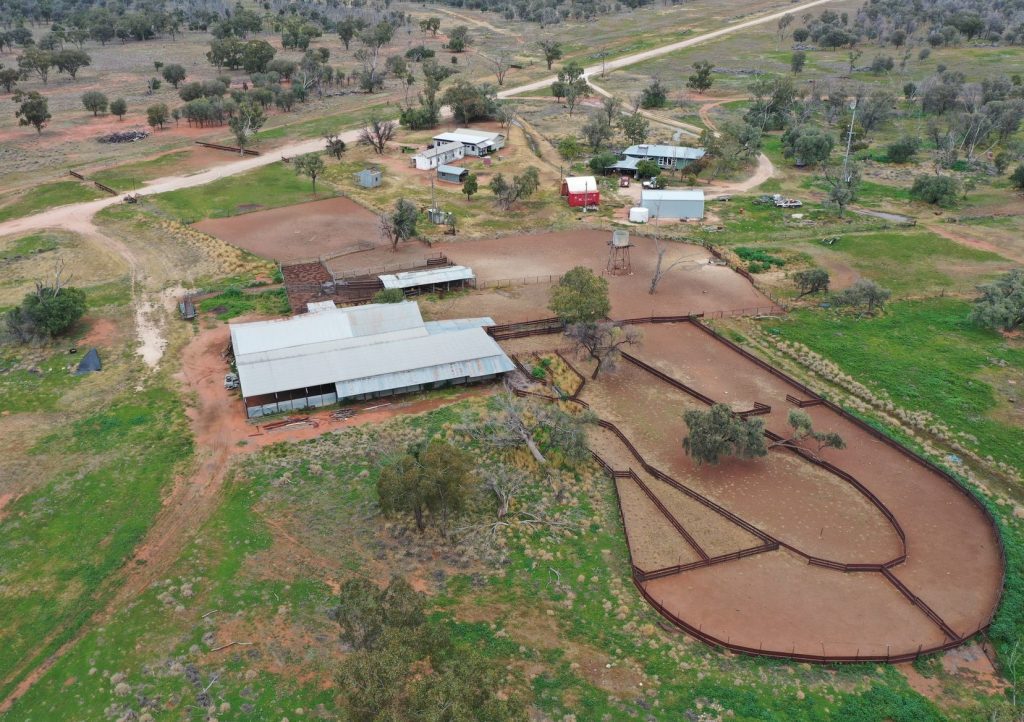
Dongon Plains and Combo is an exclusion-fenced grazing and cropping aggregation spanning 28,240ha, located 45km north-west of Goodooga and 90km south-west of Dirranbandi.
It comprises four adjoining holdings – 6946ha Dongon Plains, 6461ha Dongan Plains Woolshed, 7590ha Bundaburra and 7590ha Combo.
In a good season, Harry Pye hopes to join around 10,000 breeding Dorper ewes and finish the lambs on forage sorghum, summer crops and winter wheat, canola and oats.
The country is mostly gidgee plains and melon holes, with areas of Wallam floodplain and mulga ridges.
Mitchell, buffel and native grasses, together with salines and herbages, are estimated to support 6000 to 8000 Dorper ewes or background 1500 to 2000 steers.
Dongon Plains once produced 500 bales of wool a year and is now suited to breeding and finishing sheep, cattle or goats.
For the past 39 years, the vendors have operated a goat enterprise, with numbers ranging from 5000 to a peak of 40,000, alongside seasonal cattle trading.
Since 2022, 2330ha have been cultivated on the Wallam floodplain. In November last year, 1800ha of wheat was harvested, along with 526ha of sorghum.
Dongon Plains and Combo is situated in a 420mm average annual rainfall region and watered by two recently refurbished capped artesian bores and 15 dams.
Infrastructure includes a homestead, two cottages, workers’ and shearers’ quarters, numerous sheds, two goat/sheep yards, steel cattle and goat yards, two shearing sheds, 92km of new exclusion boundary fencing and 12,000 tonnes of grain storage.
Devine Rural agents Brendan Devine and Will Devine handled the sale.
HAVE YOUR SAY